 Ross Porter

The challenge & benefiting society. Go to Netflix and watch Alive Inside -- better than any words I can write. You'll see the joy that a person with dementia can experience when listening to their favorite music. 47 million people have dementia, and many of them cannot operate modern devices like iPods and CD players.
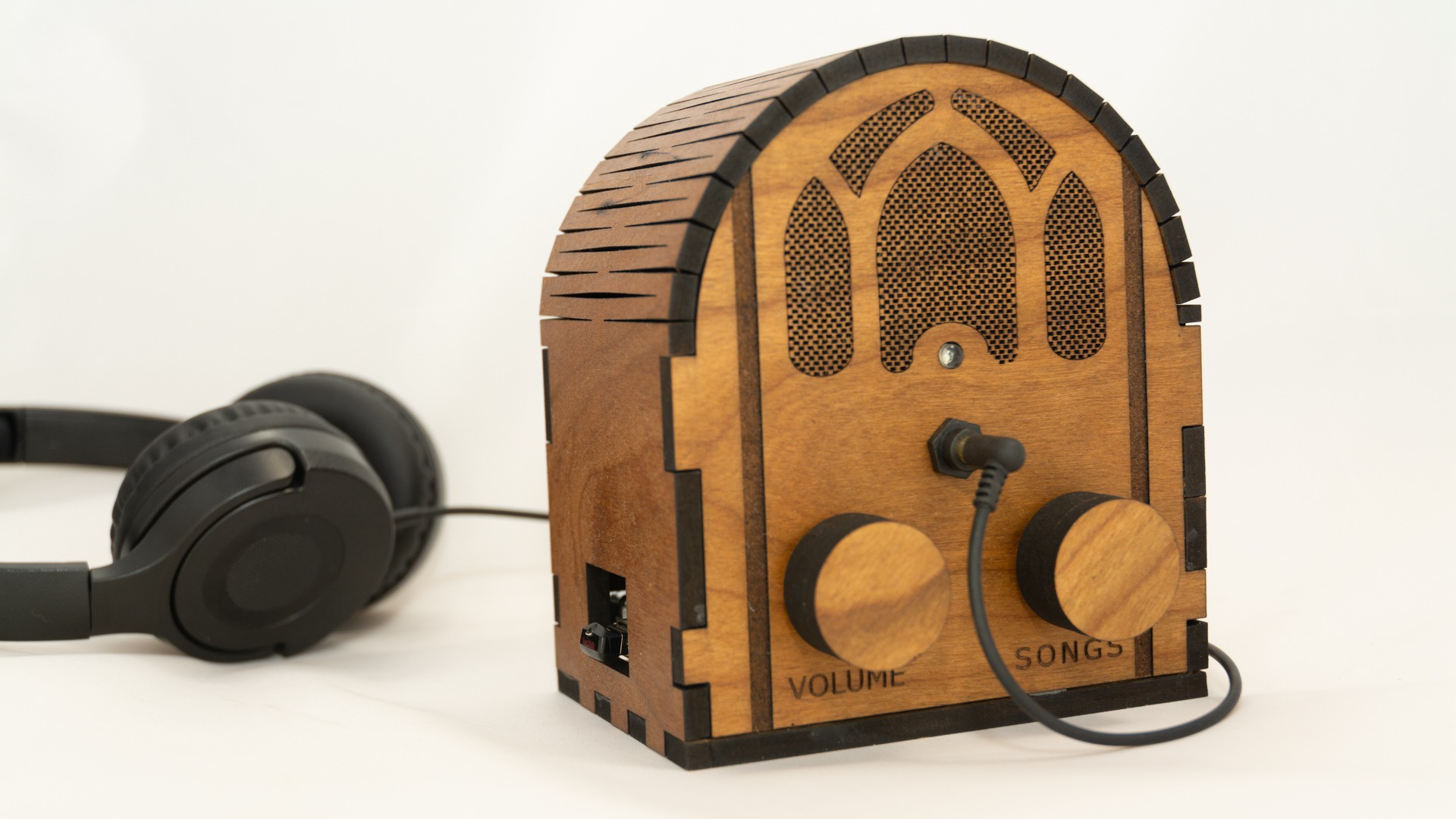
Addressing the challenge. For people with dementia, the user interface (UI) must already be familiar. Not just easy to use, but already familiar. In general, people with significant dementia do not learn new things. But they may have strong memories of how things worked when they were much younger e.g. in the 1940s. Thus DQMusicBox borrows the UI of a 1940s radio.
Documentation & design. Everything is in github. You probably mostly need the step-by-step instructions. But you will also find the requirements doc, the design doc, and the files for laser cutting. The code is also in github, but you'll probably want to get the code as part of the disk image.
Boundaries. Hackaday asks, "Is the project creative, original, and pushing some boundaries?" IMHO, the project is creative and original. It deliberately does not push technology boundaries as the intent is to keep the build process simple, so makers can get these devices out to people in need.
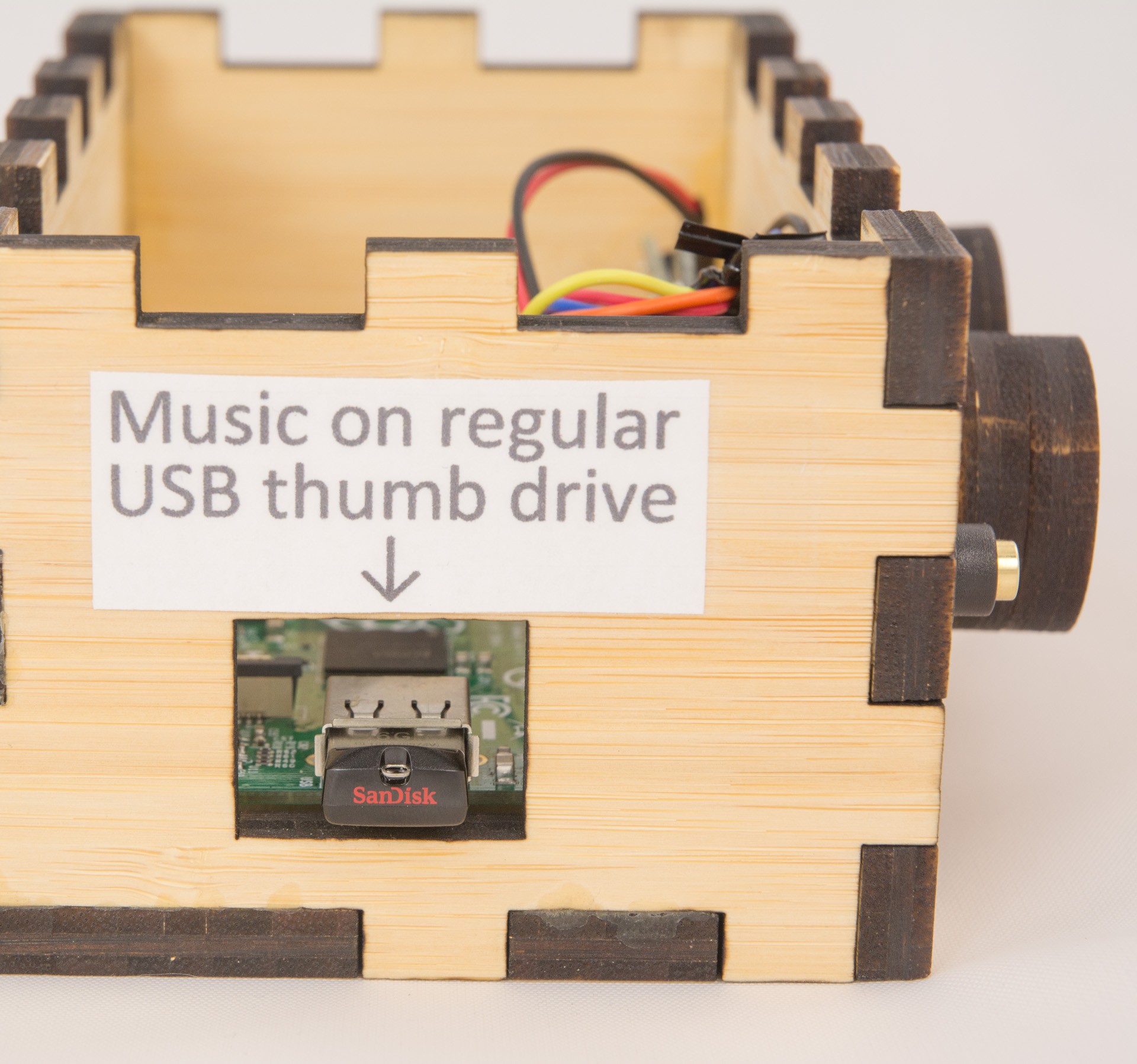
This is a deliberately simple build. No woodworking. No soldering. The step-by-step instructions include lots of photographs. Some key bits:
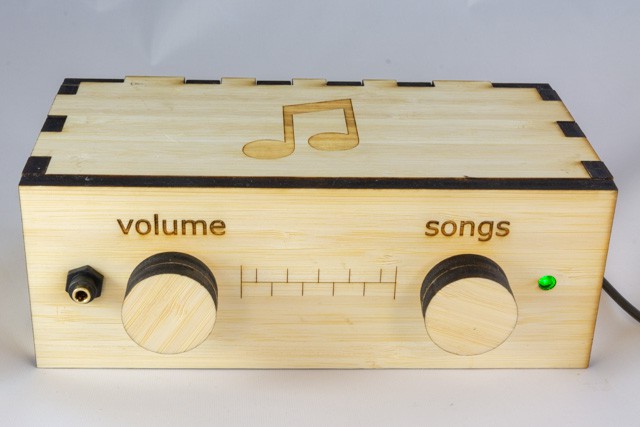
- The case is laser cut bamboo. You can cut it yourself. Since most makers don’t have a laser cutter, I tested sending the design to a company that cuts it for you (works well).
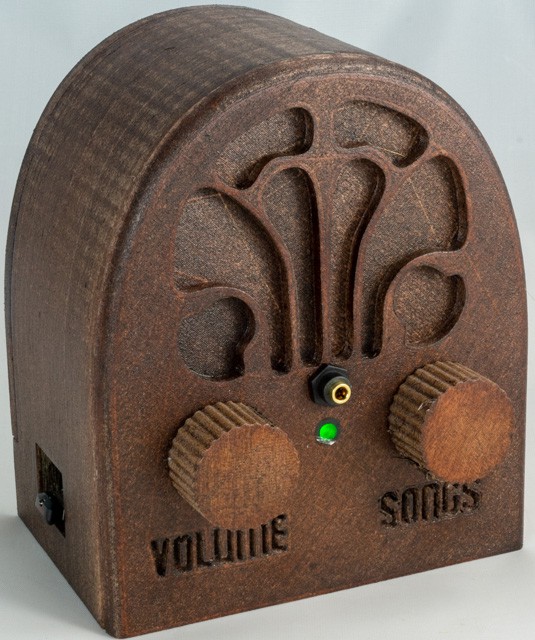
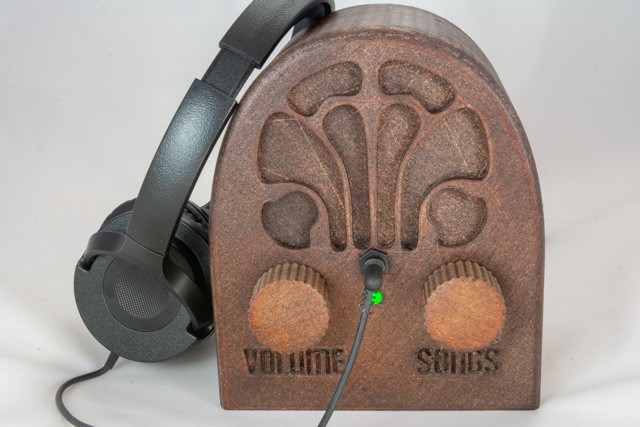
- NEW! There is now a 3D printable case, thanks to volunteer Trey Bagley.
- Raspberry Pi A+ inside
- Music is stored on a regular USB thumb drive
- Parts cost ~$60 (US) if you cut the case yourself, add $28 (US) for a company to cut for you
Although it’s a straightforward build, there are some interesting nerd bits:
- Really good sound. Uses a firmware update from the Raspberry Pi Foundation.
- Avoids corruption by using a write protected micro-SD card. Takes rare advantage of the TMP_WRITE_PROTECT feature of micro-SD cards. I learned about this on Hackaday.
It’s all open source of course. Code uses GNU General Public License, version 2. Laser cut wood case uses Attribution-NonCommercial-ShareAlike 2.0 Generic (CC BY-NC-SA 2.0).
This project was submitted to the Final Round of the 2017 Hackaday Prize, which has eight criteria. I paid attention to the criteria, and discussed some of them above. For more on the criteria performance, see the final project log. And for general information, see dqmusicbox.org.









 c.Invent
 Mike
Mike

 Joan Horvath
 RodolpheH
Hi Ross, Thanks for this great project. I decided to make this to show what was capable at a social group we have in the UK called "sheds" for older and more socially isolated groups of people. Im trying to strip it further back and not use the DAC or usb hub as it has to be as cheap as possible and repeatable for those less electronically literate. Im piggy backing the onboard headphone connector by soldering straight from it to a PAM8403 board and calling it "speaker" on the front panel, the other volume for "headphone", so adding another volume in the middle and using the p3a+ headphone jack around the back. I can not get the volume encoder to work but the track change/pause is fine. Im using your dietpi image and cant see anything including wiring that's stopping it. Have you any ideas ? Is the pi3a+ radically different or is the code tied to the dac ? I couldnt see how.