ZenVega

The heart of the macropad is a RP2040 based microcontroller. V0.5 uses a Seeed Xiao RP2040 whereas in V1 we switched to using a RP2040 Zero: https://www.waveshare.com/wiki/RP2040-Zero
Hardware side:
Both have a very small footprint and output just enough GPIOs and an ADC for our project.
After prototyping on a bread board we went to manifest our schematics on a PCB designed in KiCad.
The pad consists of 4 Cherry MX Keyswitches (or equal ones), which can be changed out due to the use of hot swaps.
A 75mm fader, a SPDT (single pole double throw) switch and 3 LEDs.
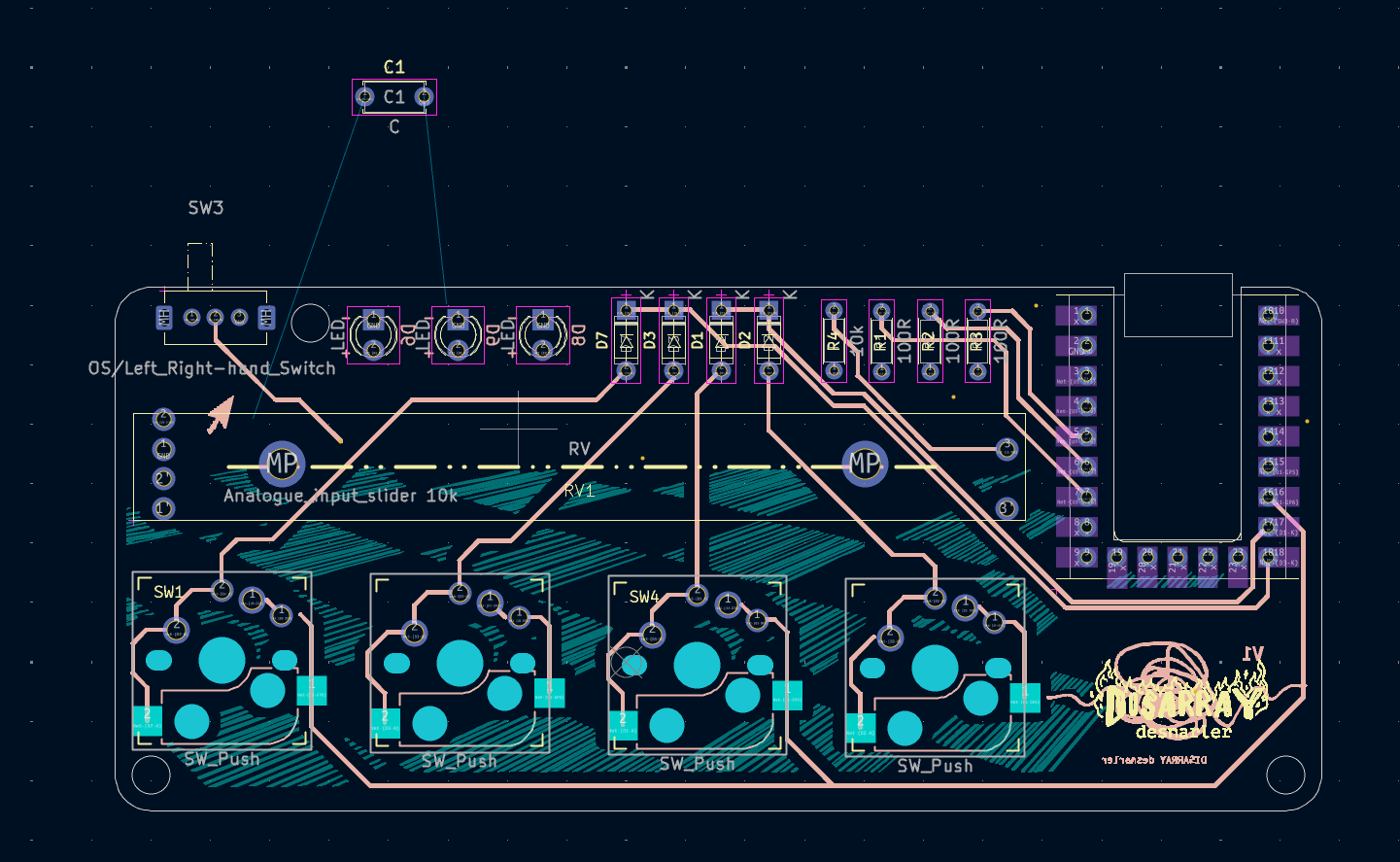
All files can be found in our github documentation: https://github.com/ZenVega/disarray_desnarler_docs
The schematics are quite straight forward, since the MCU is basically doing al of the work for us:
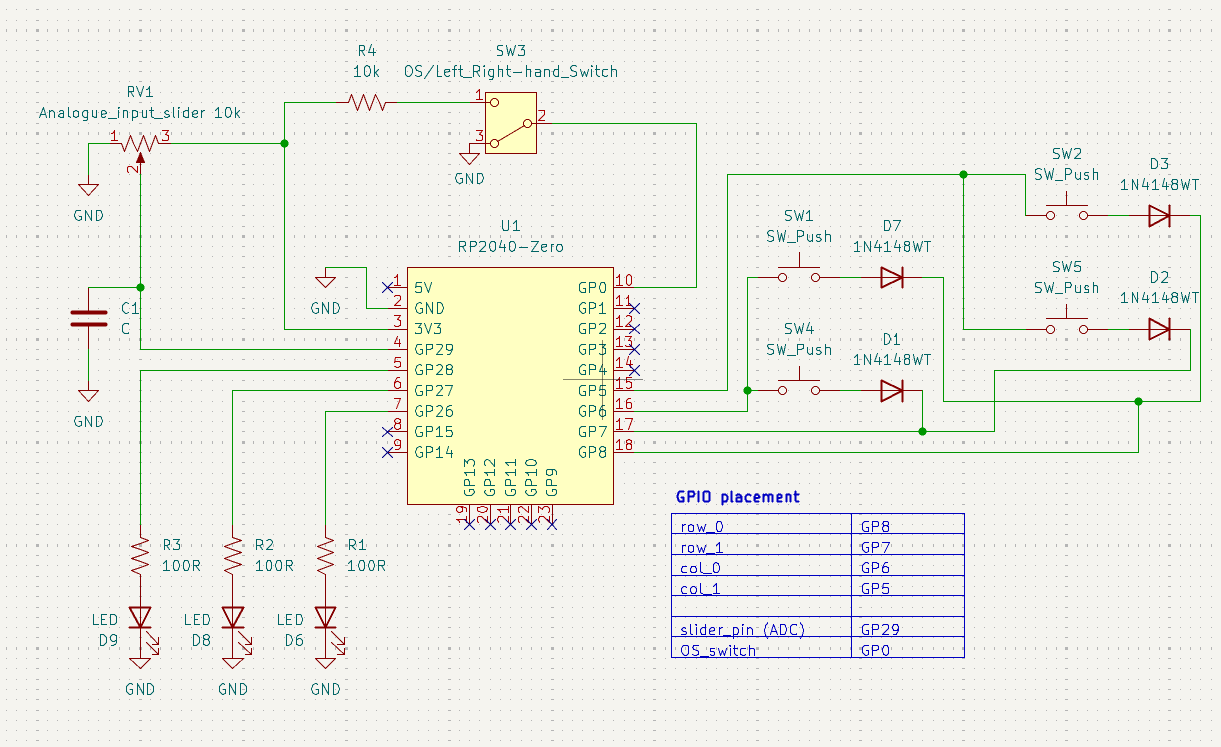 We are basically multiplexing the key switches in rows and columns and secure ghosting by adding a diode to each switch.
There is a fixed state switch on the back giving you the option to toggle between two configurations.
A variable resistor/fader adds another layer of control. It is buffered with a capacitor and interpreted via an ADC.
Three diodes help to make layer shifting visible.
Code side:
The project is driven by QMK a super well maintained and documented open source firmware for keyboards: https://docs.qmk.fm/
When you want to play around with the code, that's a great place to start. Our documentation also provides a guidline on how to flash the pad and to start with one of our configurations, which include a OS-workspace navigation mode, a MIDI controller and some simple key combos: https://github.com/ZenVega/qmk_disarray_desnarler
 Bryan Souza
 John W.
 andriy.malyshenko