Close
0%
0%

RK3506G2+FPGA drives multiple LCD screens

Use RK3506G2+XC6SLX25+512M DDR3 to divide the video data of framebuffer into 6 outputs from lvds. 6 displays use GW1NSR-LV4CQN48.

Similar projects worth following
1. RockChip's newly released RK3506G2 QFN128 chip, which includes 3x1.5GHz Cortex-A7+ 200MHz Cortex-M0 and 2x 100MMAC and built-in 128M DDR3L. It has a set of 16bits 150MHz DDR data transmission DSMC bus interface (which multiplexes with 24bits RGB interface) and 2Lanes MIPI DSI interface. It can run Linux 6.1 or Preempt-RT real-time system + RTOS. We use its DSMC/RGB interface to connect xilinx's XC6SLX25 FPGA chip, making it more suitable for various applications for various flexible interfaces. For example, the application of metering/ADC/DAC/DDS/video. The second is to use Allwinner's T113-S4+XC6SLX25, which has built-in 256M DDR3 and Gigabit MAC and 1080P decoding capabilities. We use 2xLVDS to connect to XC6SLX25, enabling it to output 1920x1080 video signals. 2. We have also designed several very interesting FPGA small boards with NGFF interfaces, which can be replaced directly. They are XC6SLX16/25/45+667Mbps 512MBytes DDR3 and 28nm XC7S50+800Mbps 512MBytes DDR3L and GW2AR-LV1

1. RockChip's newly released RK3506G2 QFN128 chip, which includes 3x1.5GHz Cortex-A7+ 200MHz Cortex-M0 and 2x 100MMAC and built-in 128M DDR3L. It has a set of 16bits 150MHz DDR data transmission DSMC bus interface (which multiplexes with 24bits RGB interface) and 2Lanes MIPI DSI interface. It can run Linux 6.1 or Preempt-RT real-time system + RTOS. We use its DSMC/RGB interface to connect xilinx's XC6SLX25 FPGA chip, making it more suitable for various applications for various flexible interfaces. For example, the application of metering/ADC/DAC/DDS/video. The second is to use Allwinner's T113-S4+XC6SLX25, which has built-in 256M DDR3 and Gigabit MAC and 1080P decoding capabilities. We use 2xLVDS to connect to XC6SLX25, enabling it to output 1920x1080 video signals.

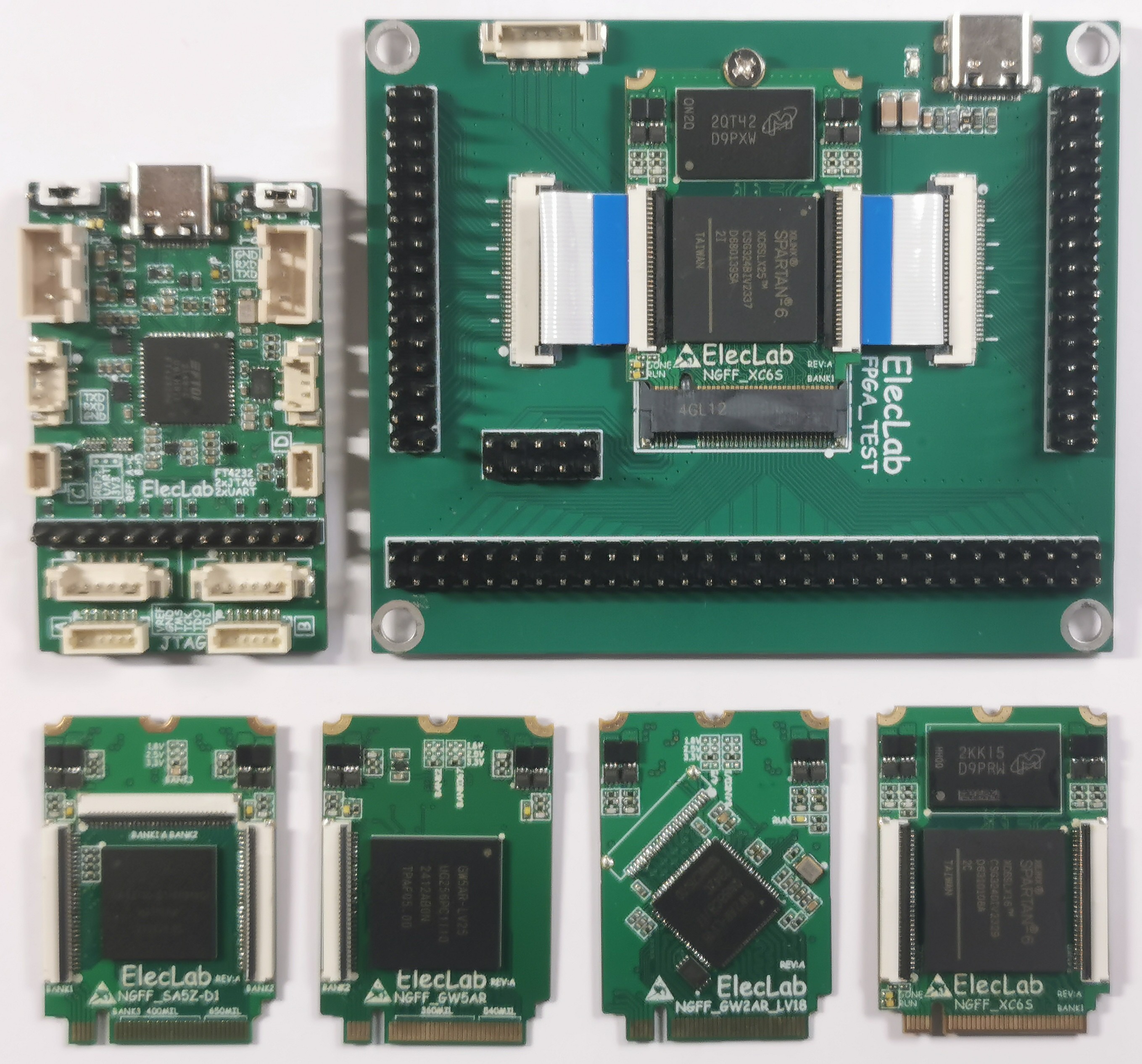
2. We have also designed several very interesting FPGA small boards with NGFF interfaces, which can be replaced directly. They are XC6SLX16/25/45+667Mbps 512MBytes DDR3 and 28nm XC7S50+800Mbps 512MBytes DDR3L and GW2AR-LV18 QFN88 package integration 20K LUT and 166MHz 64Mbit 32bits SDRAM and 22nm GW5AR-LV25 BGA256 package integration 23K LUT and 1066Mbps 128Mbits 16bits HyperRAM and 28nm SA5Z-30-D1 BGA213 package integration 32K LUT and 800Mbps 128Mbits DDR2+200M Cortex-M3. Next, several models will be designed, such as the 16 nm model and the LPDDR3/LPDDR4 interface.

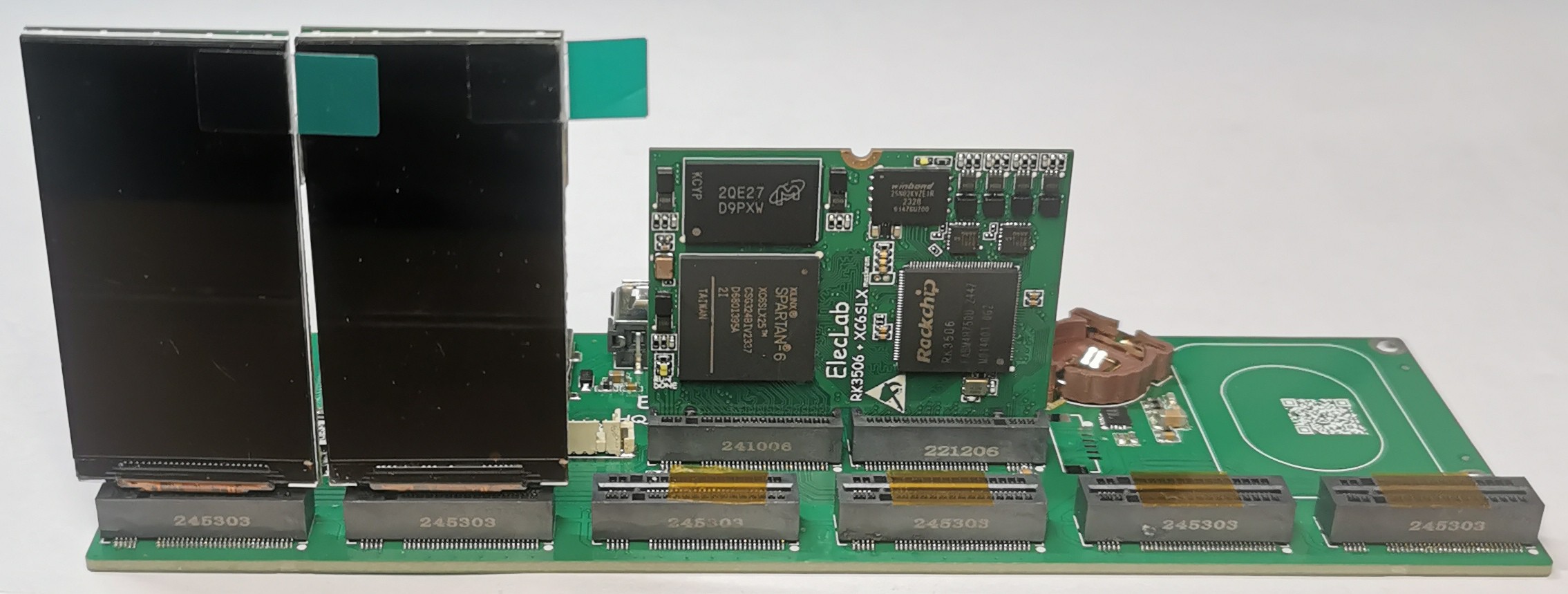
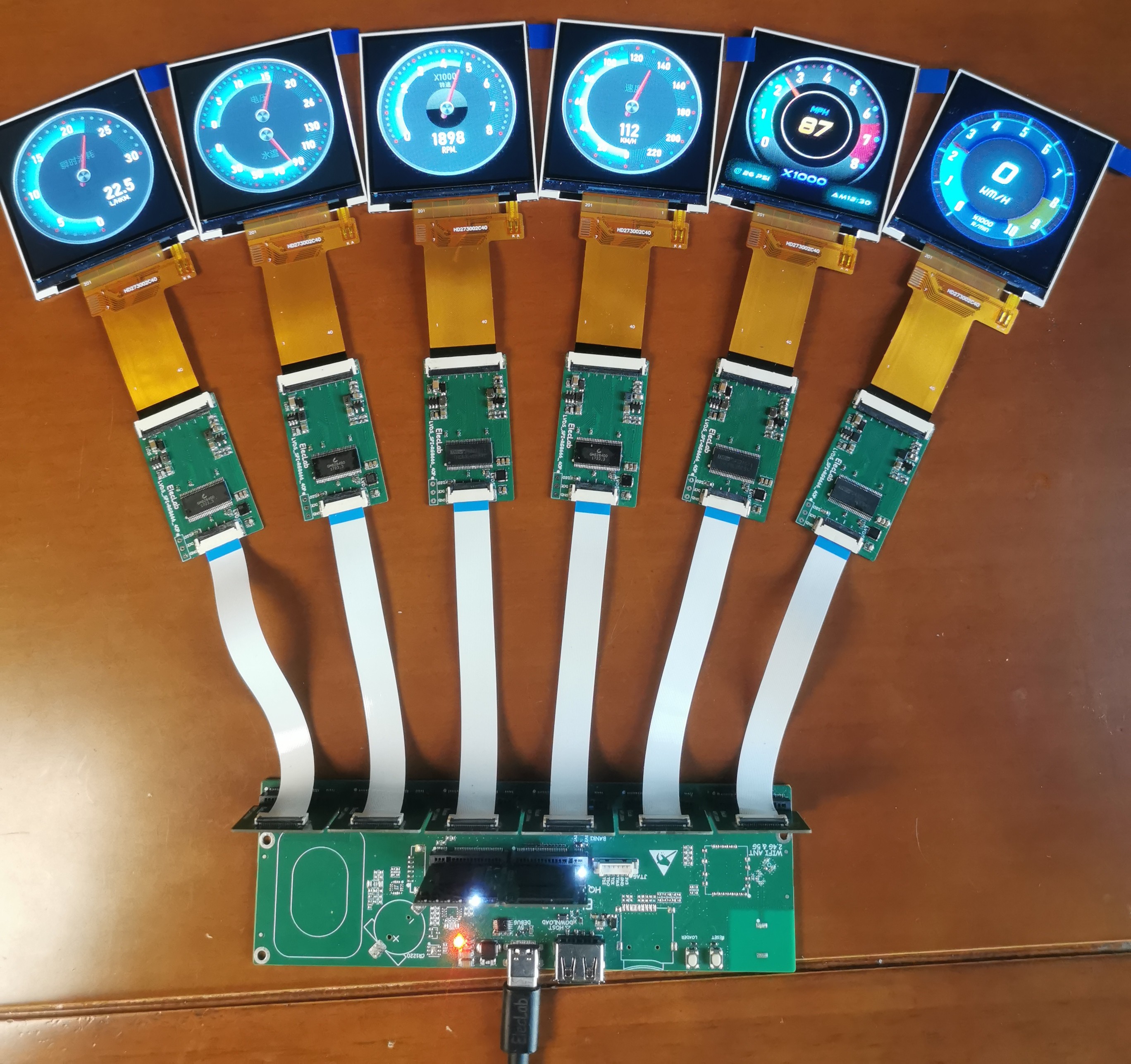
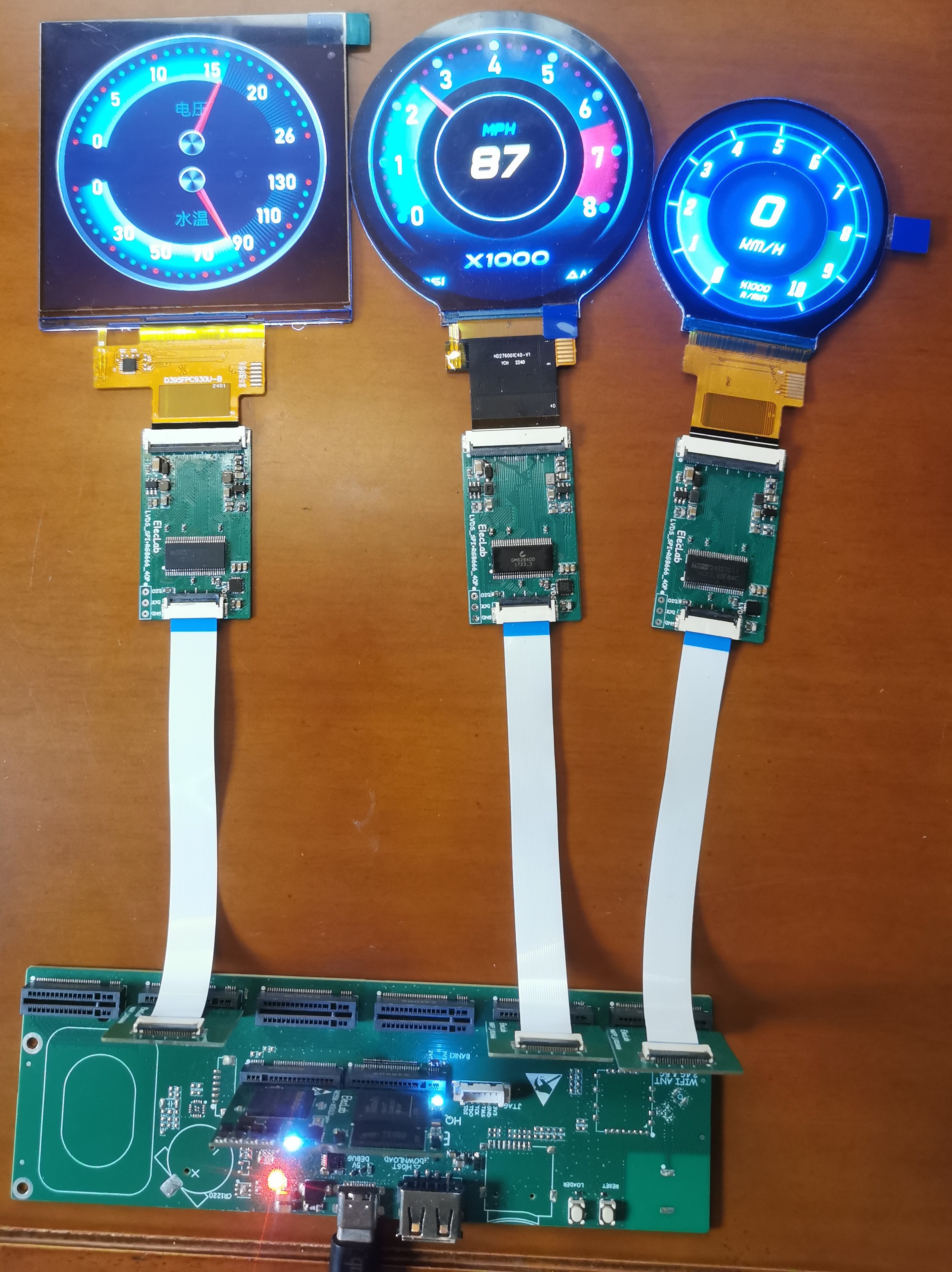
3. For the display part, we use GW1NSR-LV4CQN48 QFN48 package, which is a $2 and highly integrated FPGA chip. It has 4K LUT and 100MHz Cortex-M3 and 64Mb HyperRAM, MIP I IO can be output to the MIPI display and connect to the MIPI CSI camera. We used it to design a 1.9INCH 170x320 small display for Linux framebuffer. The whole display module uses a 6x1.9Inch display, which displays different areas under the same Framebuffer. Of course, we are also using it to design 1.54"/2.73" 320x320 MCU square display and 1.6" 400x400 MIPI circular display, and we are trying to integrate the OV5640 MIPI camera into this display module. All 6 displays receive Framebuffer cutting signals from ARM+FPGA boards through the LVDS interface.

Set the framebuff with a resolution of 1020x320 on RK3506 and switch the reused IO pin from the DSMC function to RGB24.
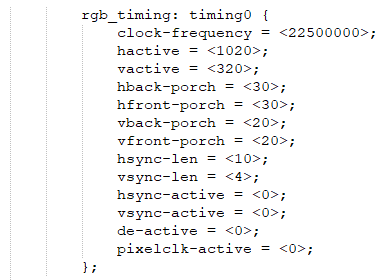
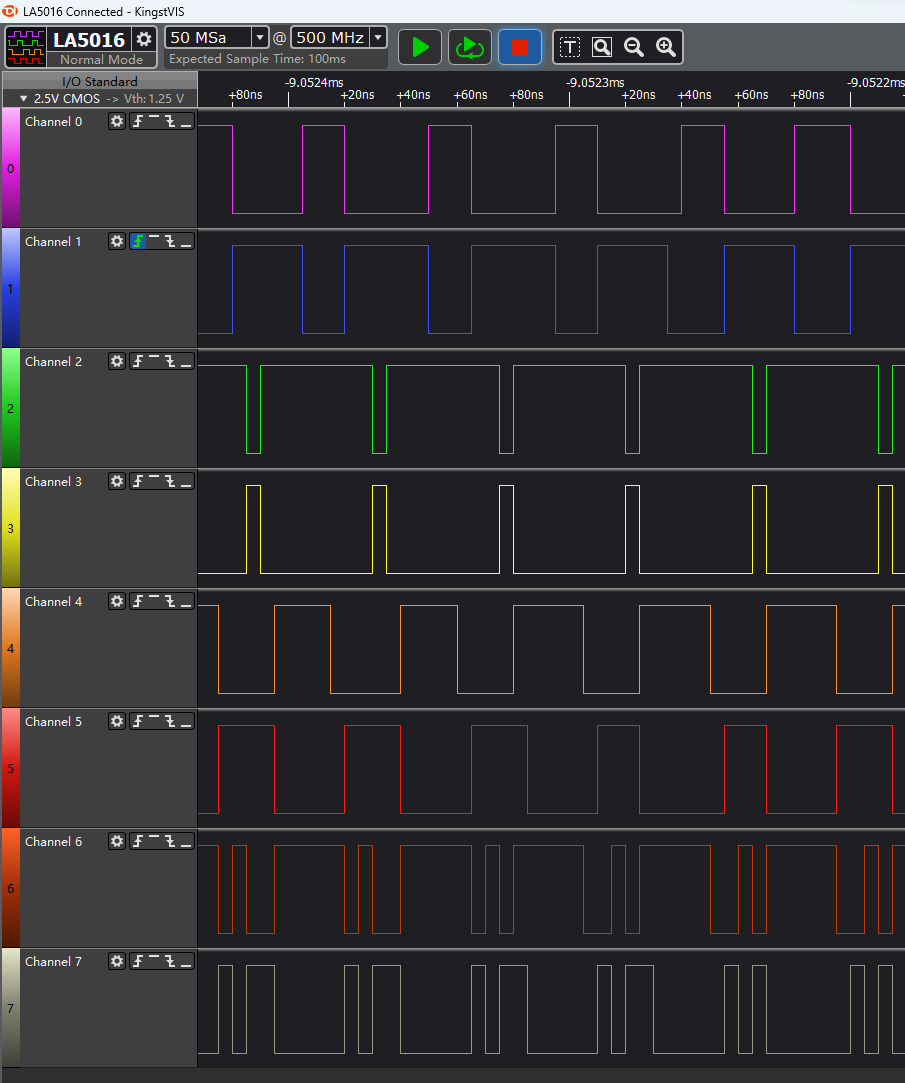
Create 6 rgb666->lvds data 3lanes modules on xc6slx25, verify its output, and test the PCB lvds signal with a logic analyzer..
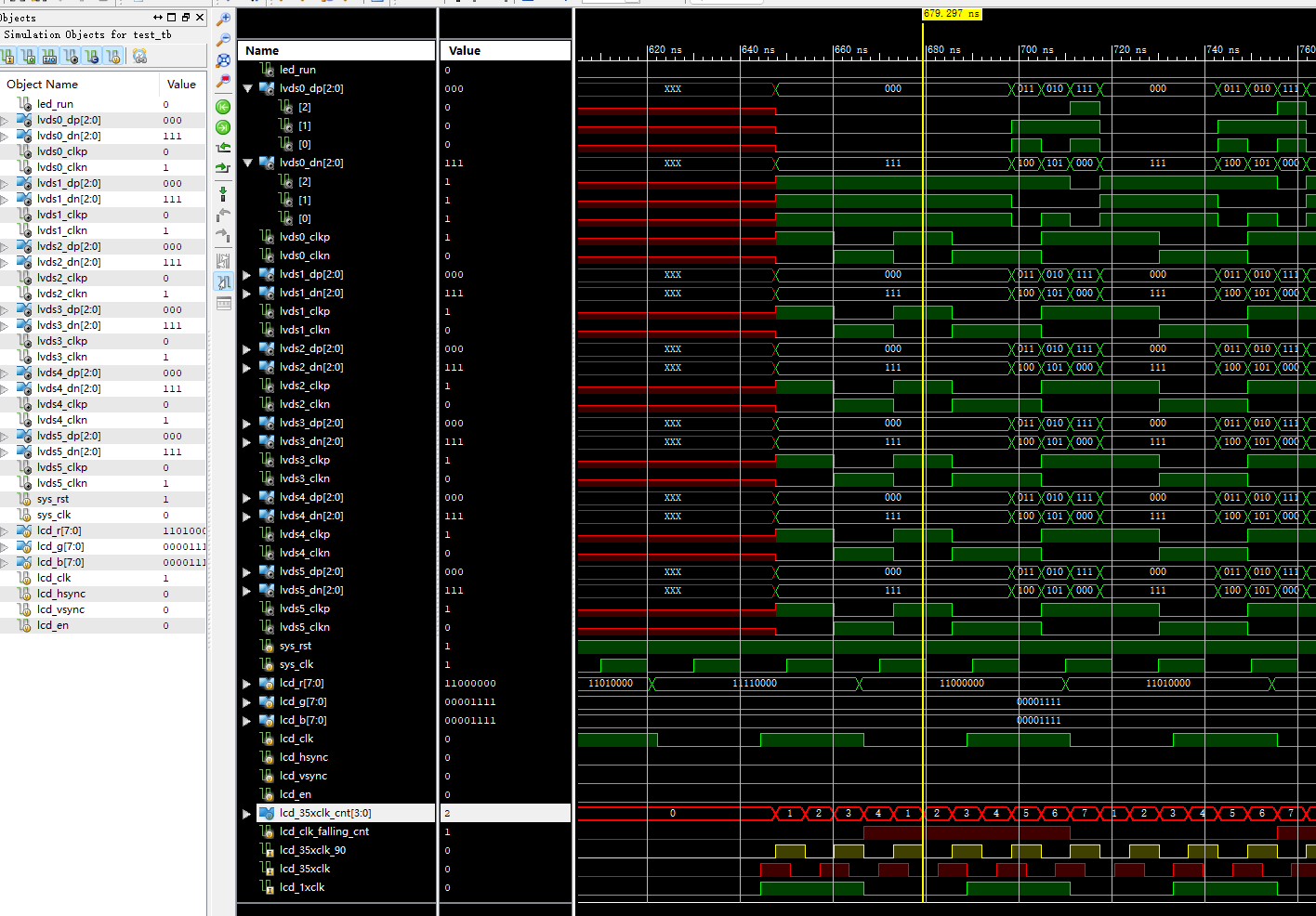
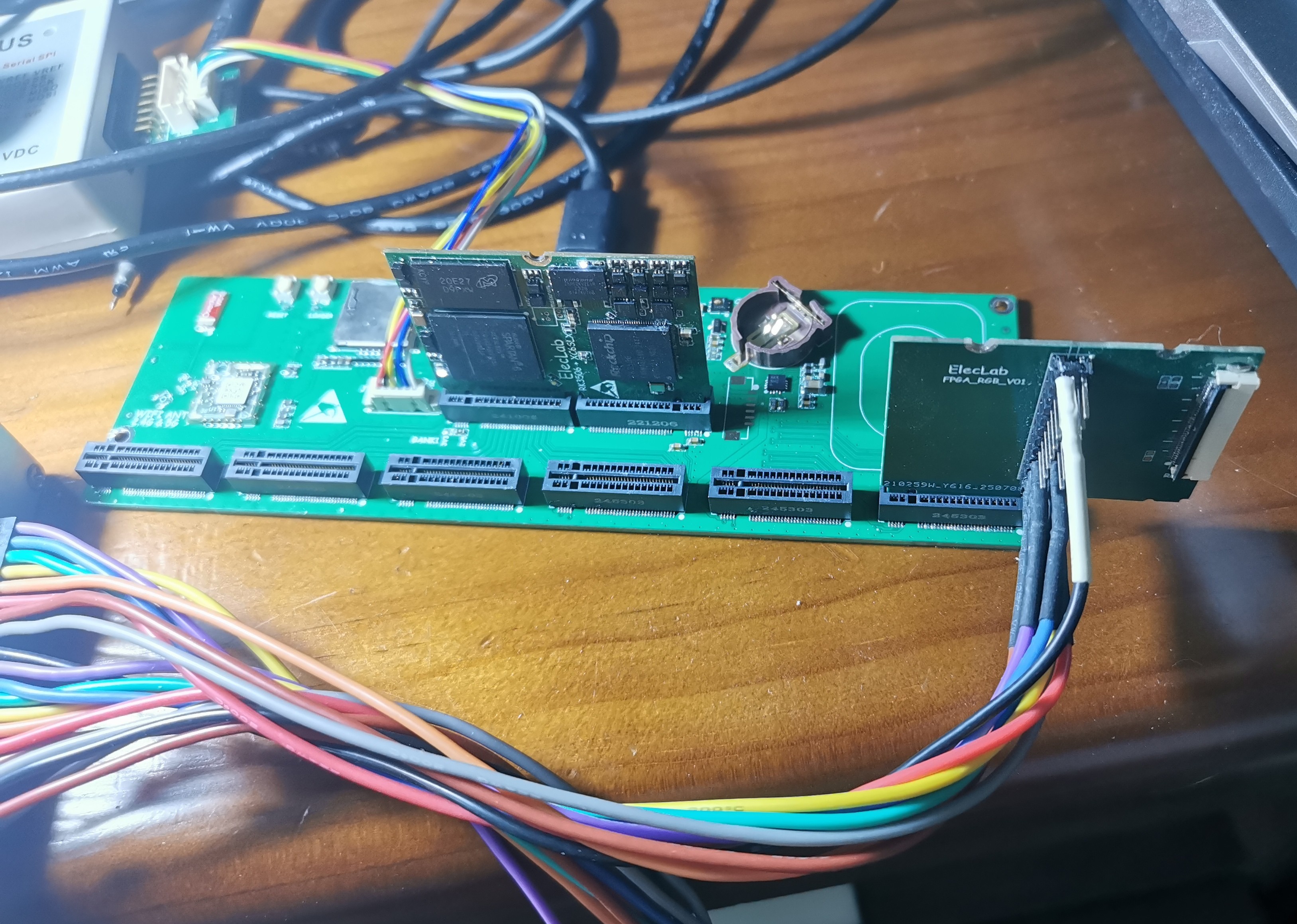
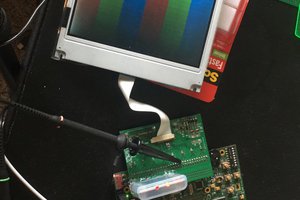
The lvds signals are decoded to RGB666 normally, and the next step is to display its contents on the MCU 8Bit 1.9" 170x320 LCD screen.
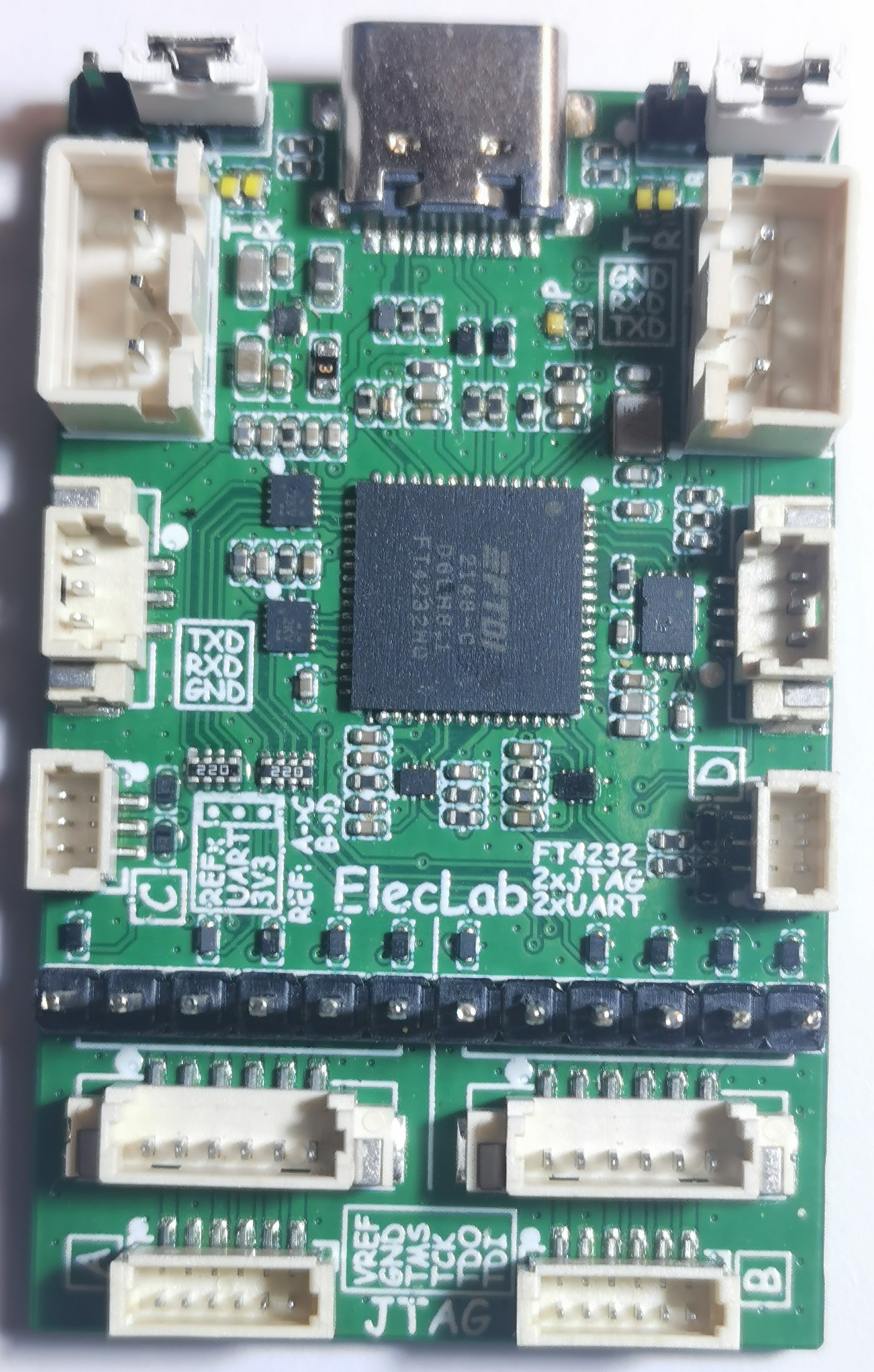
The FT4232HQ with two JTAG interfaces is very convenient. Maybe I can improve the FT4232HQ version of 4xJTAG. It will be great when multiple boards need to be tested!
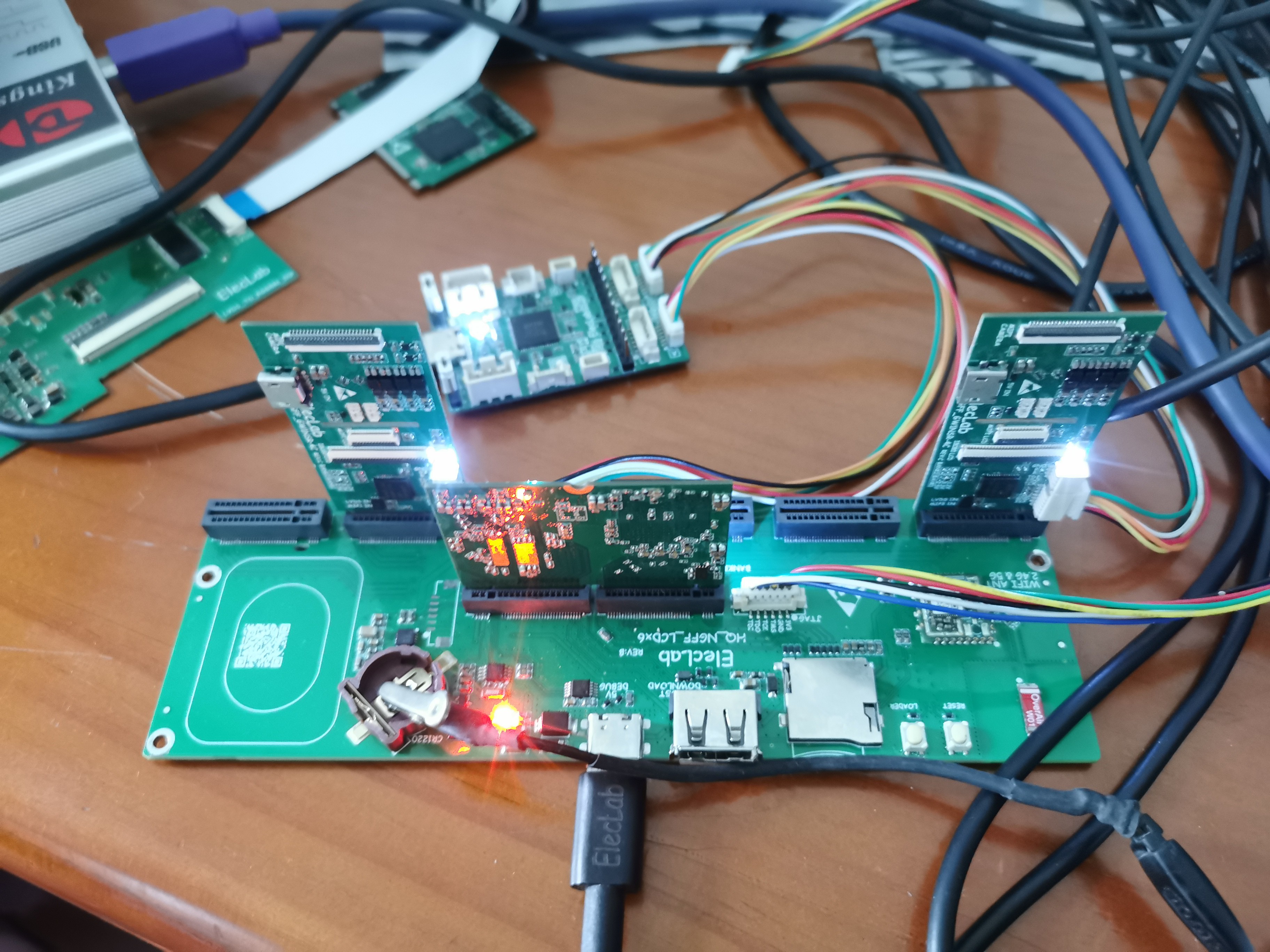
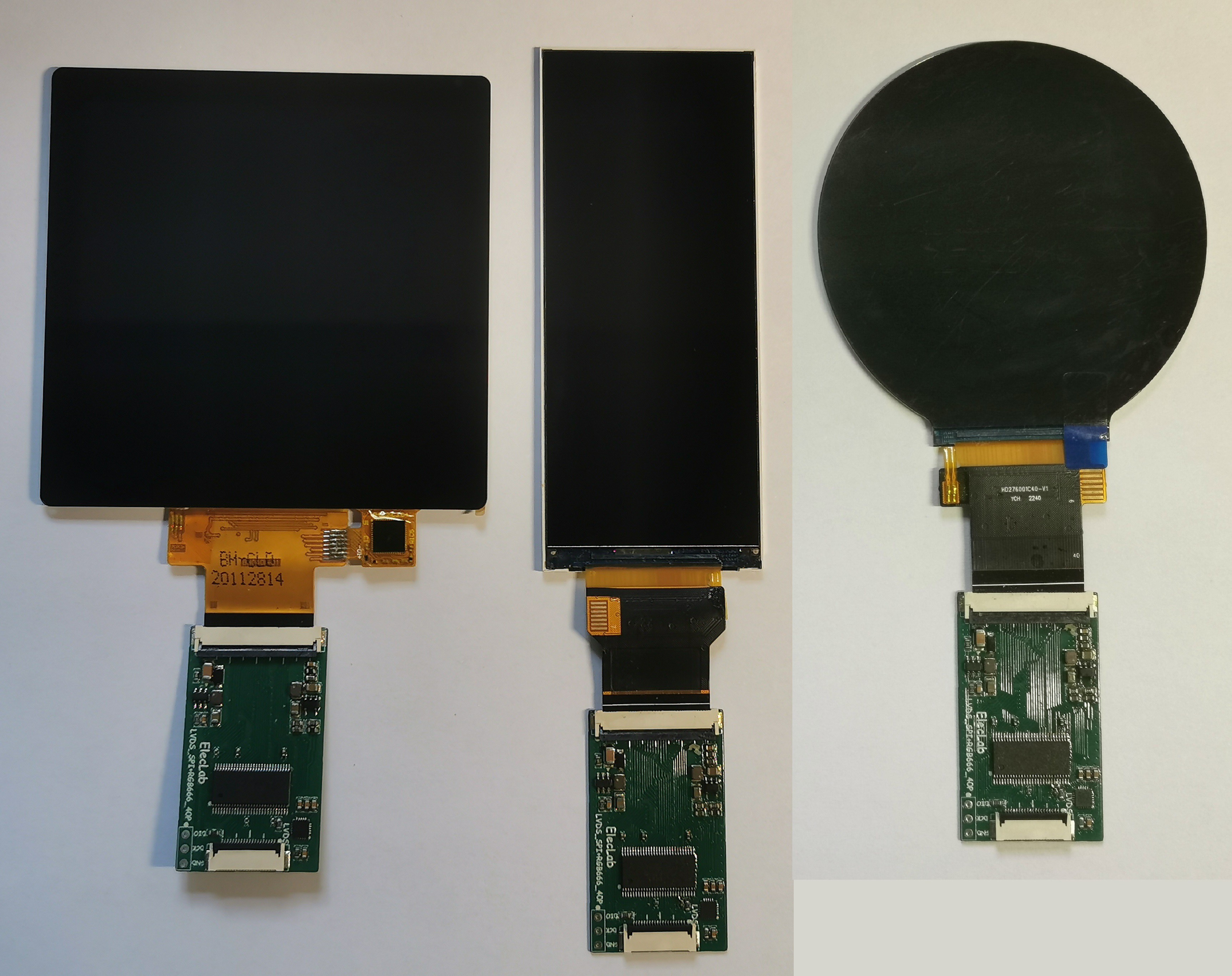
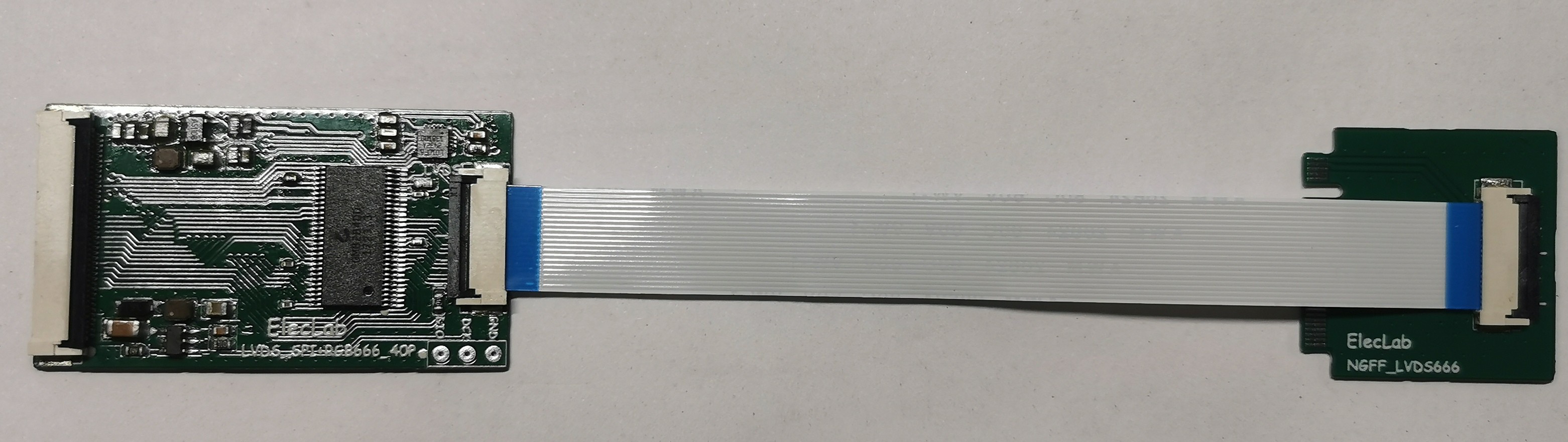
We have designed a new LCD screen adaptation board, which can be connected to a variety of small 40P LCD screens, including round screens, long strip screens and square screens.
3 lanes LVDS signal input, RGB666 signal output.
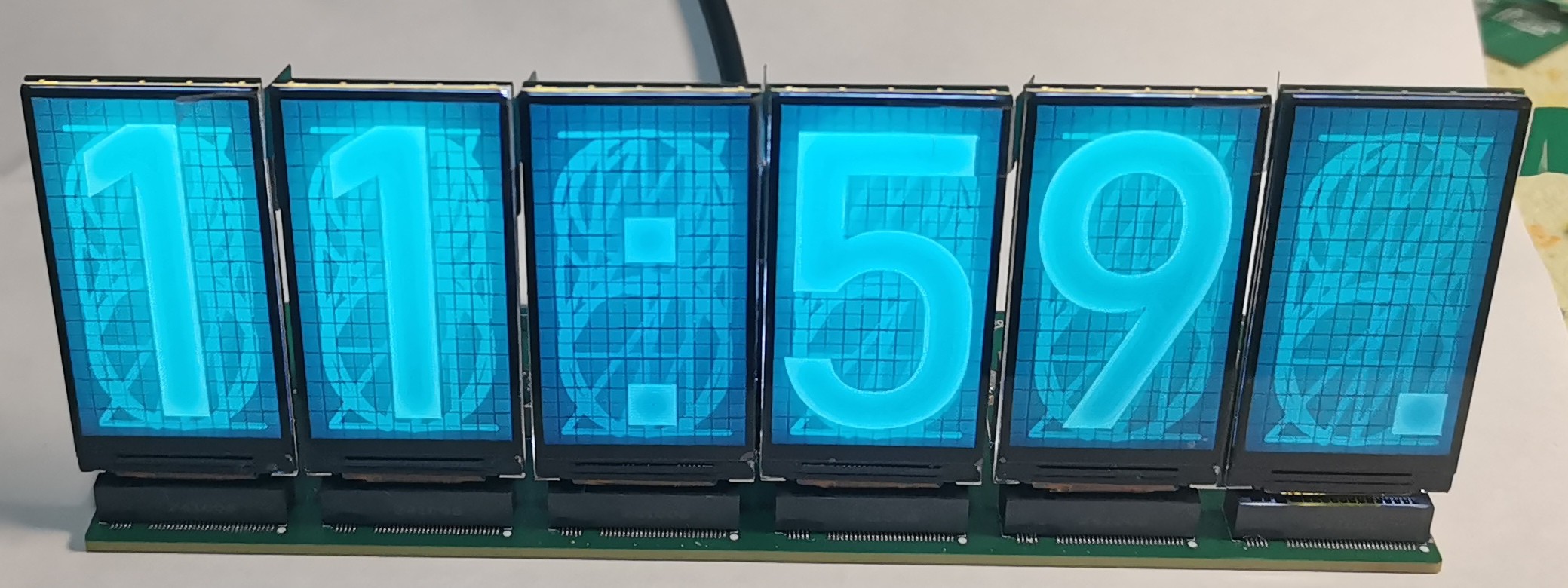
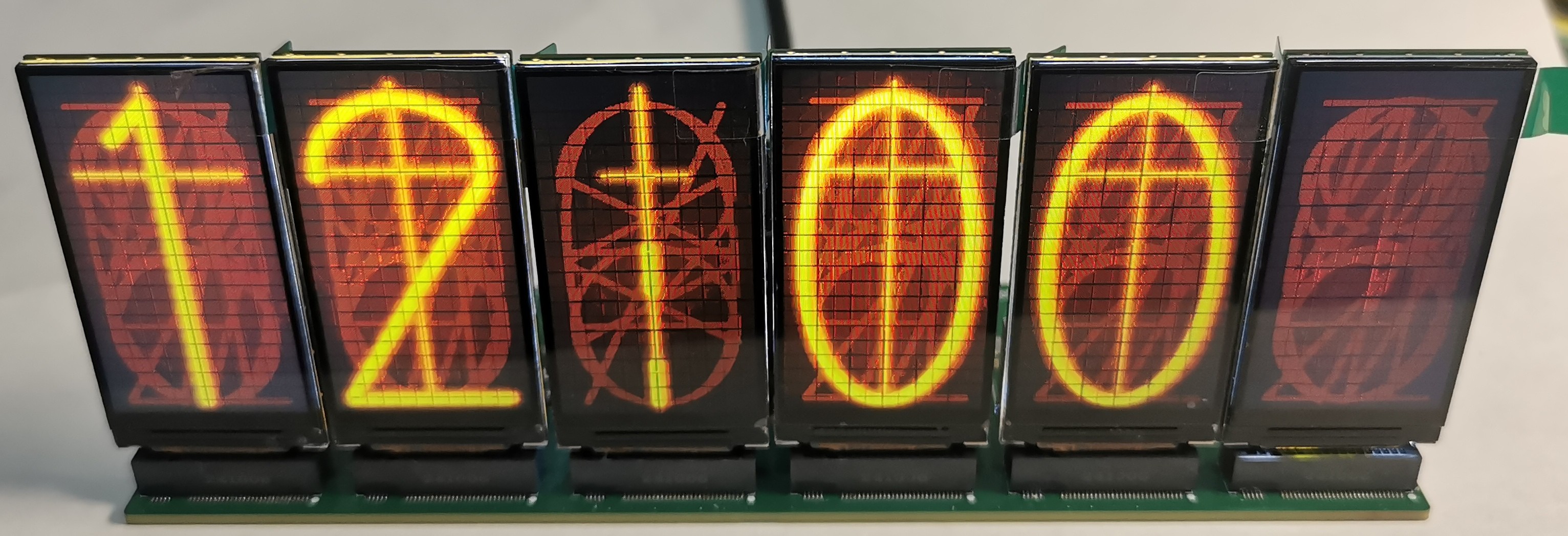
The FPGA board can drive six such displays, which is more suitable for some situations that require multiple small LCD screens, such as multi-meter displays.
The glow tube display program is designed using lvgl, which is set to a refresh rate of 20Hz due to the characteristics of the MCU screen.
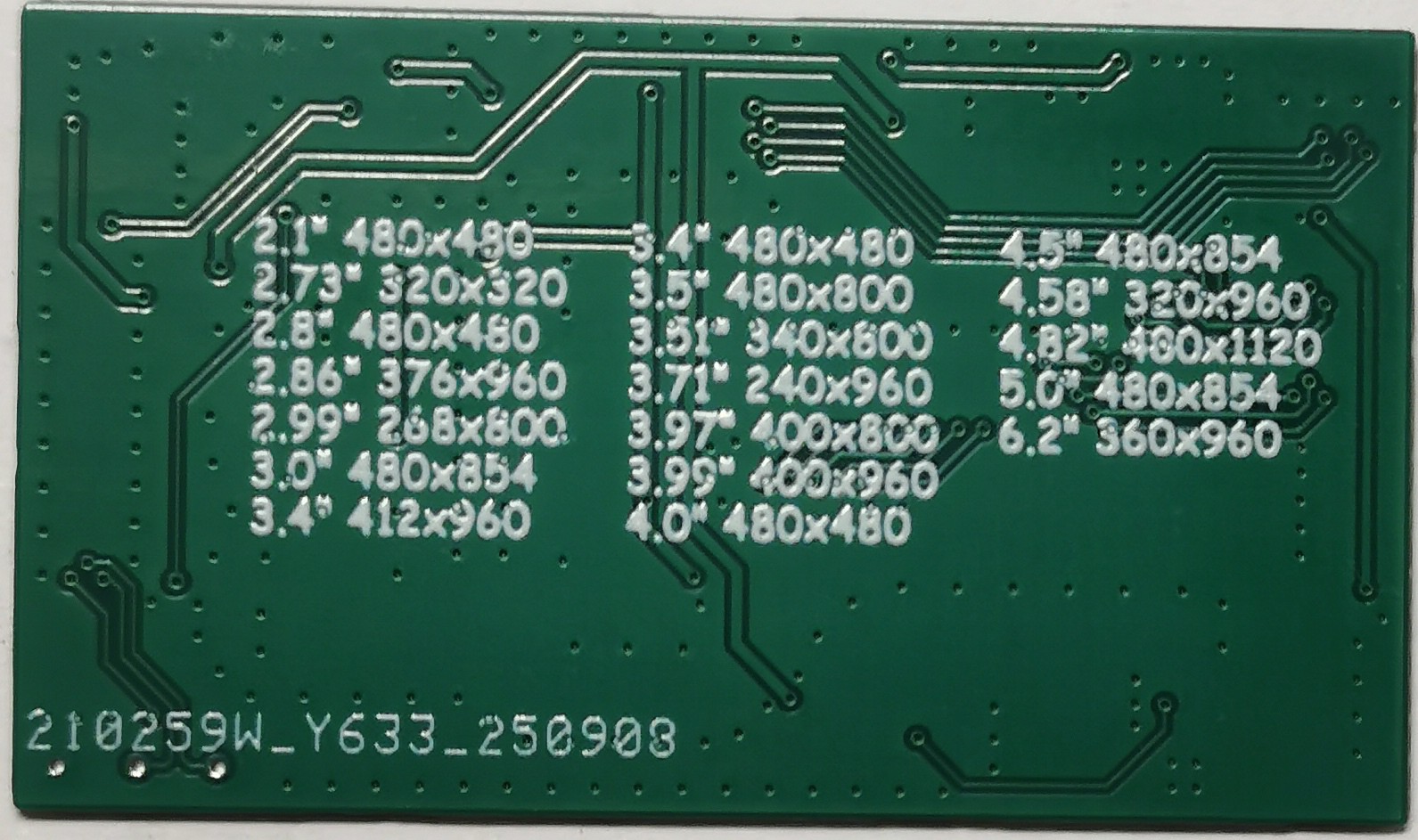
Complete the 3 lanes lvds-> RGB666 PCB board, using a universal 40P RGB LCD interface, which can adapt to LCD screens of many sizes and resolutions.
  • Several NGFF FPGA core modules and verification boards

    ElecLab08/26/2025 at 03:54 0 comments

    - 45nm XC6SLX16/25/45-CSG324 + 512MB DDR3  

    - 28nm XC7S50-CSG324 + 512MB DDR3L  

    - 55nm GW2AR-LV18 QFN88 package integrating 20K LUTs/166MHz 64Mbis x32 SDRAM  

    - 22nm GW5AR-LV25 BGA256 package integrating 23K LUTs/1066Mbps 128Mbis x16 HyperRAM  

    - 28nm SA5Z-30-D1 BGA213 package integrating 32K LUTs/800Mbps 128Mbits x16 DDR2/200MHz Cortex-M3.

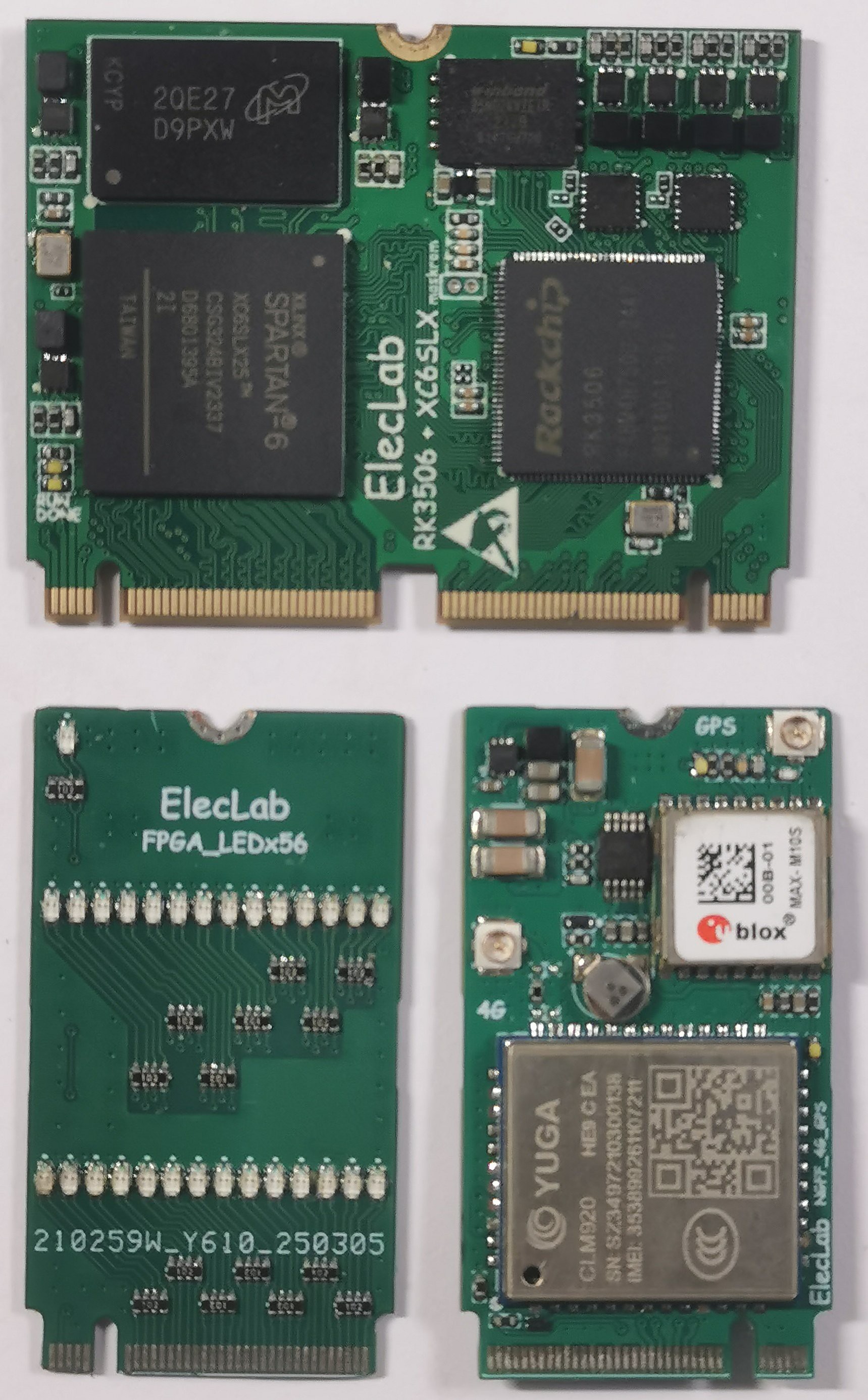
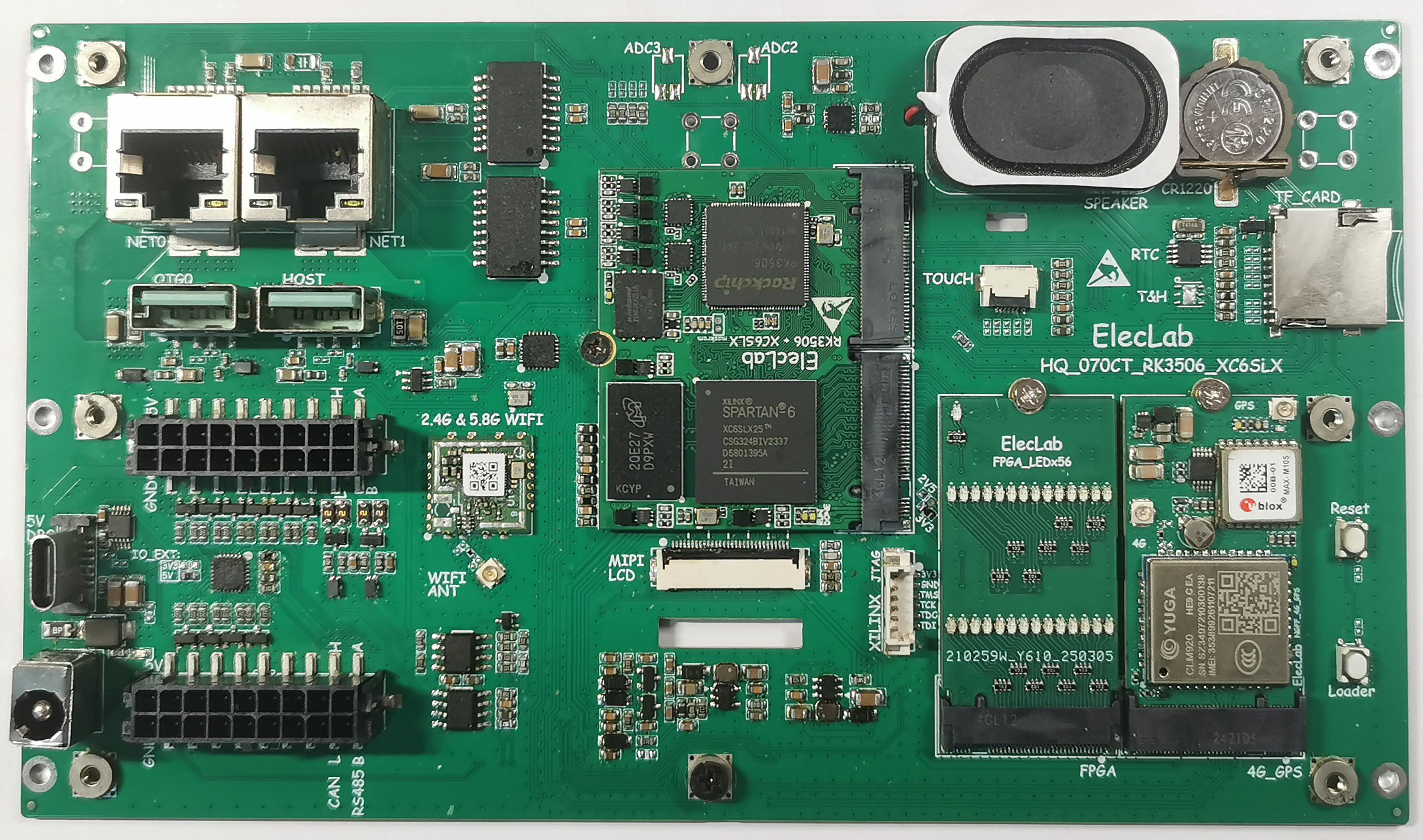
  • RK3506G2+XC6SLX25 core board

    ElecLab08/26/2025 at 03:10 0 comments

    The FPGA part leads to 28 pairs of LVDS lines, all of which are equilength wiring on the front and back.

    RK3506G2 leads to 2x100Mbps PHY/2xUSB/SDIO/2Lanes MIPI DSI/19xRMIO/2xADC, and its 16bits DSMC/RGB24 interface is connected to FPGA. You can choose to use FPGA as a bus device or RGB 24bits video cutting.

    The 7-inch MIPI DSI display verification board leads to 2x100Mbps RJ45/2xUSB/WIFI6/USB 4G/GPS module NGFF socket/MX3.0 socket (CAN/RS485/16xIO PCA9535)/6 P capacitive touch screen/speaker

    We will upload the Kicad schematic, but the Kicad file of the PCB will not be open source for commercial reasons.

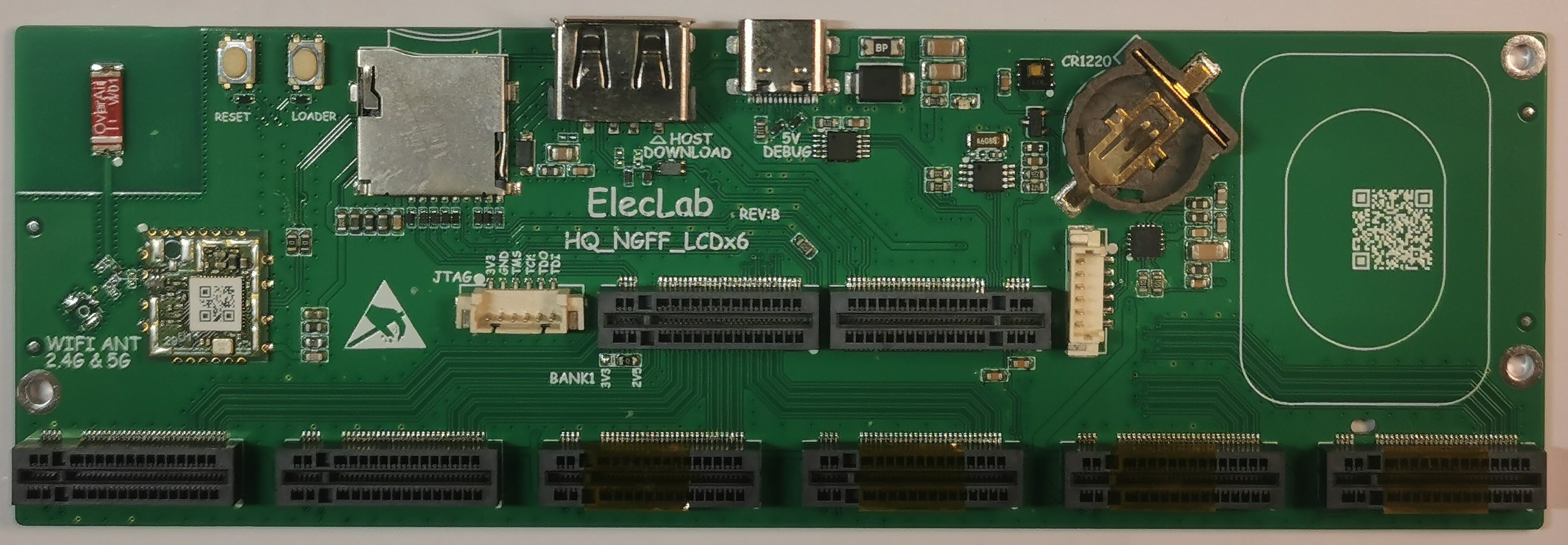
  • FPGA video split display board

    ElecLab08/26/2025 at 02:52 0 comments

    This motherboard can verify the LVDS split output of T113-S4/RK3506G2 + XC6SLX25, and 6 NGFF sockets can connect 6 1.9" GW1NSR-LV4 displays.

    RTC/horn/WIFI6/USB are available, and the TypeC port can be connected to the computer to power the motherboard and UART debug.
    We can use it to achieve functions similar to rgb tube clock. Of course, video decoding playback/GIF playback can also be used after inserting the core board of T113-S4.
    Similarly, the Kicad file will be uploaded to github later.

  • FPGA_FT4232HQ_2JTAG_2UART

    ElecLab08/26/2025 at 02:41 0 comments

    The download software of GW1NSR-LVC4QN48 can choose the download port of FT4232, so we designed a 2xJTAG+2xUART download line using the FT4232 chip. Of course, it can also be used for xilinx download, but it needs to burn another .bin file to EEPROM, and xilinx can only use port A of FT4232.
    The terminals of JTAG use 6P 1.0mm/1.25mm/2.54mm three spacing connectors, and the VREF voltage can be adaptive from 1.2V to 5V.
    UART voltage is adaptive from 1.5V to 5V. C port UART can choose JTAG's A port VREF or 3.3V, and D port UART can choose JTAG's B port VREF or 3.3V. The 3P terminal also has three specifications: 1.0mm/1.25mm/2.54mm.
    Kicad files and EEPROM.bin files will be uploaded to https://github.com/eleclab-rpi/FPGA_FT4232HQ_2JTAG_2UART later

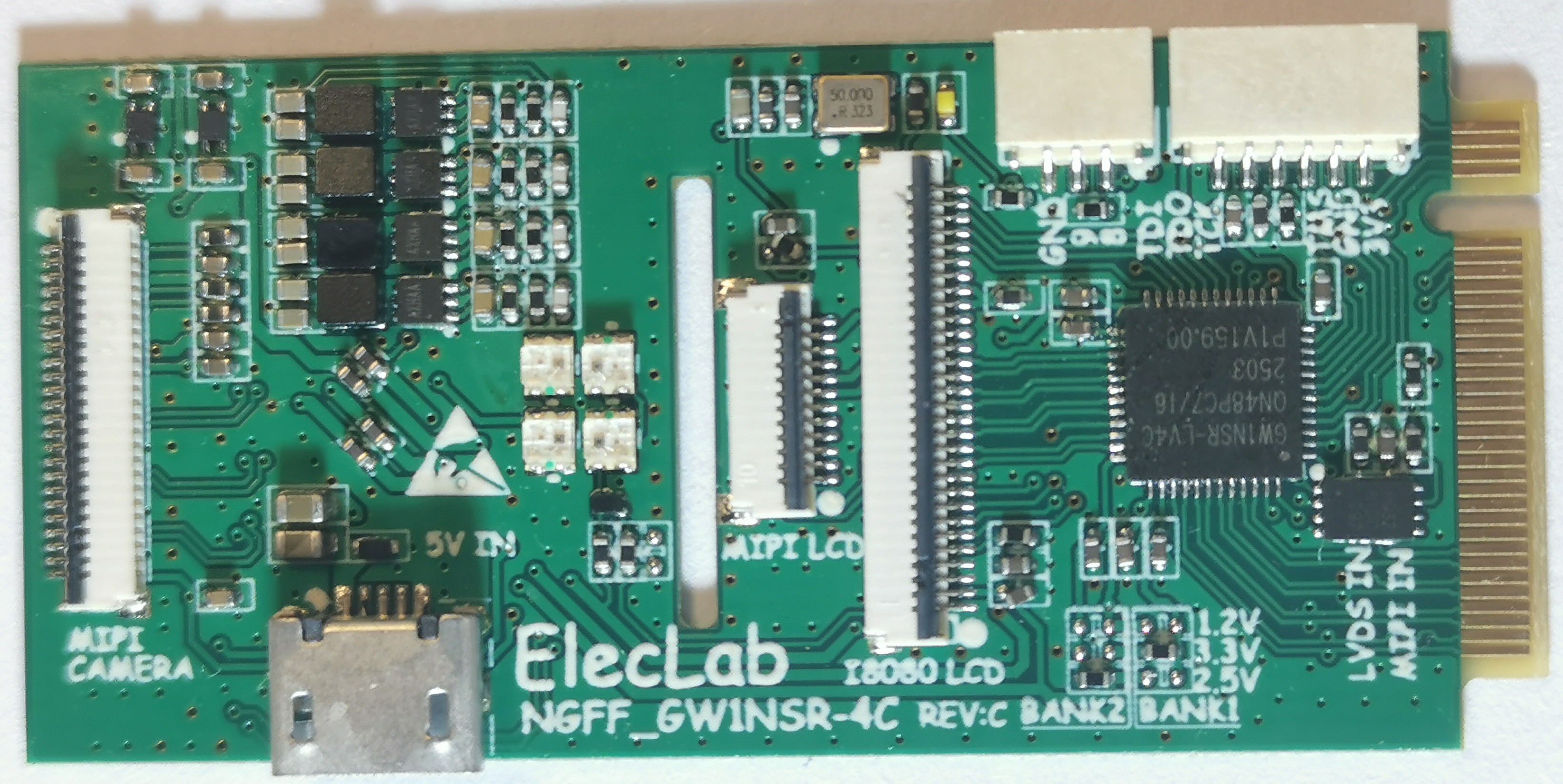
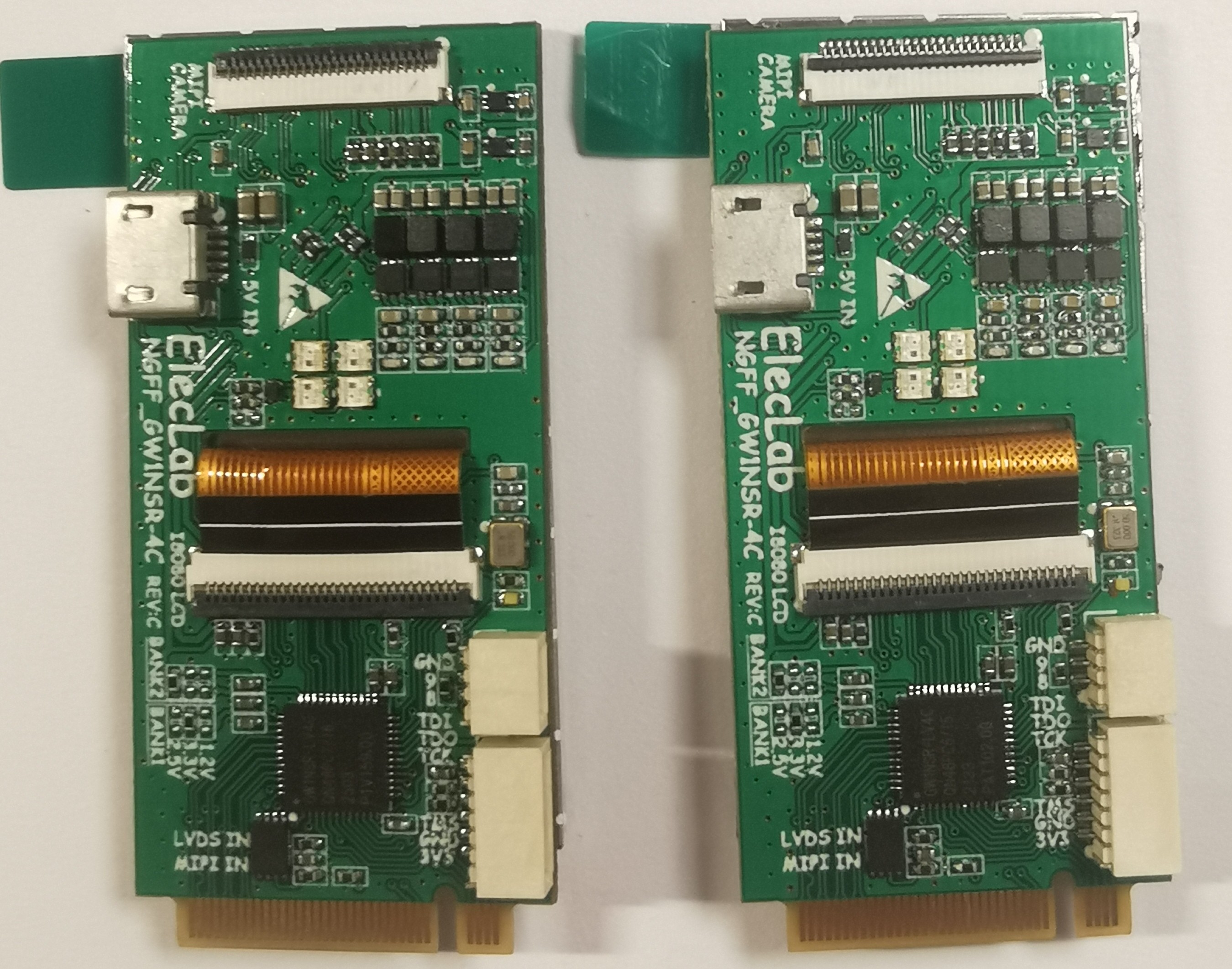
  • FPGA_GW1NSR_LV4_1.9"_170x320_LCD

    ElecLab08/26/2025 at 02:22 0 comments

    The hardware design welding work has been basically completed after many modifications, and we will introduce it from the smallest display unit.


    At first, we needed to install multiple 1.9-inch displays on the machine to display simple counting information. I thought of T113-S3/RK3506G2 + XC6SLX for Linux framebuffer video cutting, and then sending it from lvds to multiple small displays, which only needs to maintain the Linux application.
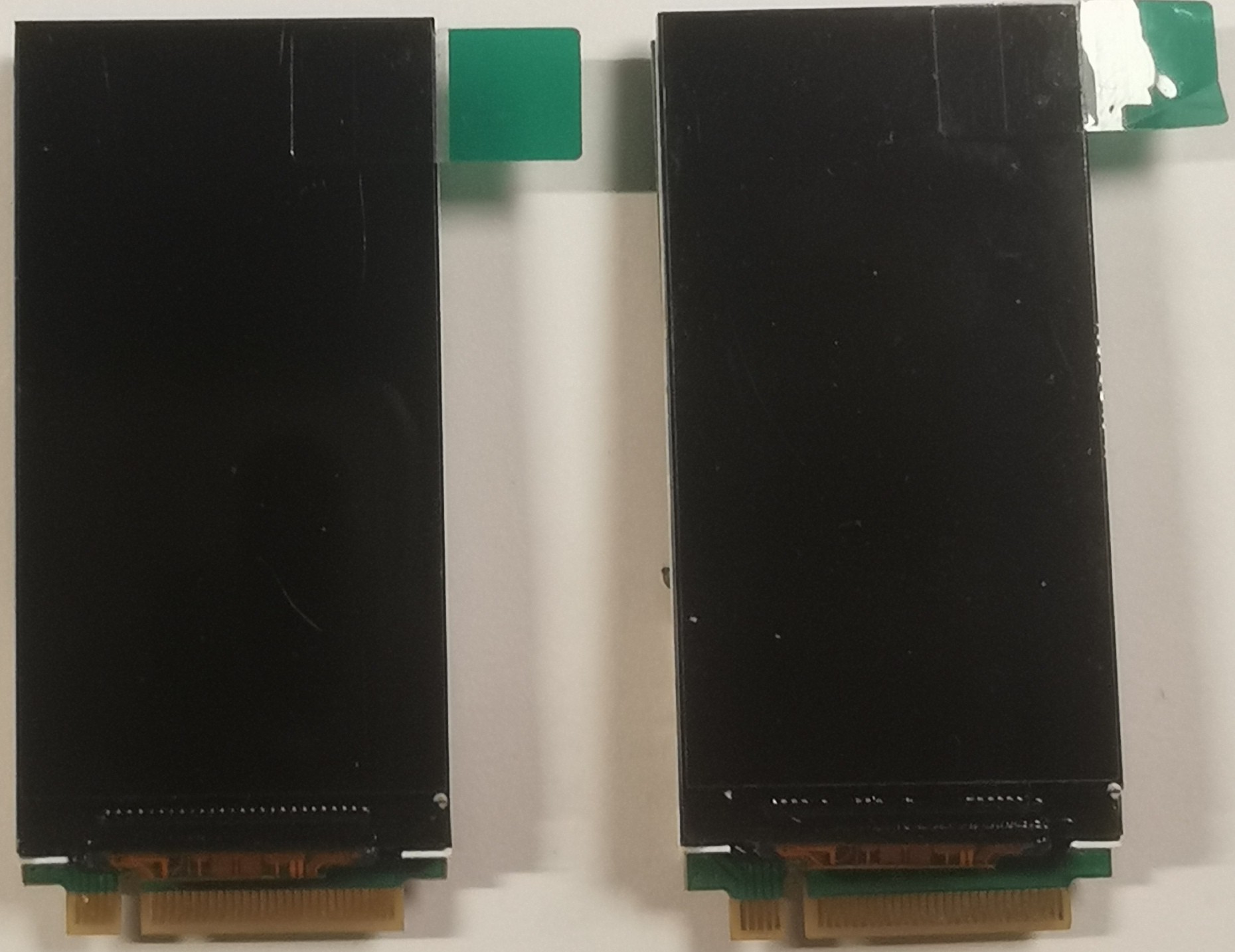
    We chose a cheap QFN48 small chip-->GW1NSR-LV4CQN48, which is QFN48 packaged and easy to design and weld. It has 4K LUTs that can fully meet micro applications, and it also has built-in 100MHz Cortex-M0 and 64Mbits HyperRAM. Input data from lvds and output from MCU I8080/MIPI LCD interface. LCD interface We have equipped with 30P MCU I8080 interface and 1.9" 170x320 8bits I8080 LCD screen. We also selected a 1.6" 400x400 12Pins 1Lane MIPI round LCD screen as a reserve. I have set up aWS2812B ambient light for it. A 24Pin OV5640 2Lanes MIPI camera interface is also reserved for future verification.
    Another new version has been modified, and we have added a terminal 100R resistor to the input of the MIPI CSI camera according to the original FAE prompt.
    We will prepare Kicad's design files later and they will be placed under https://github.com/eleclab-rpi/FPGA_GW1NSR_LV4_1.9-_LCD.

View all 5 project logs

  • 1
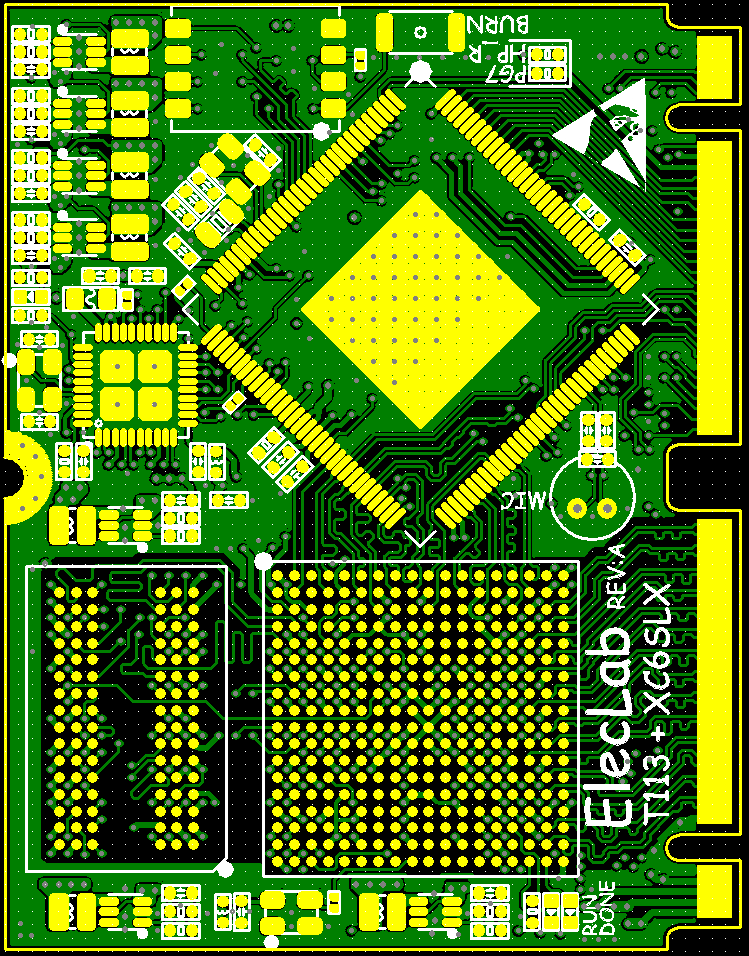
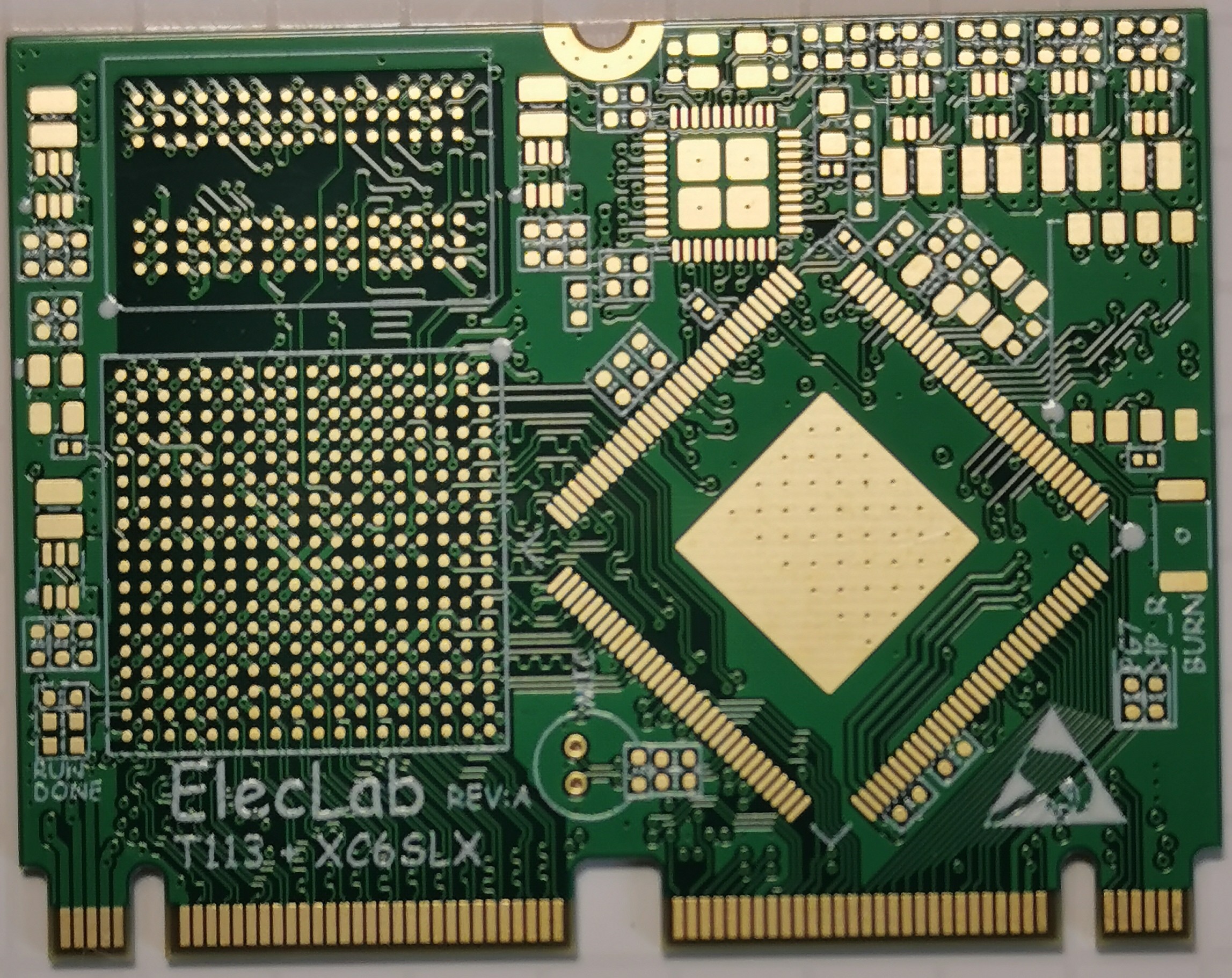
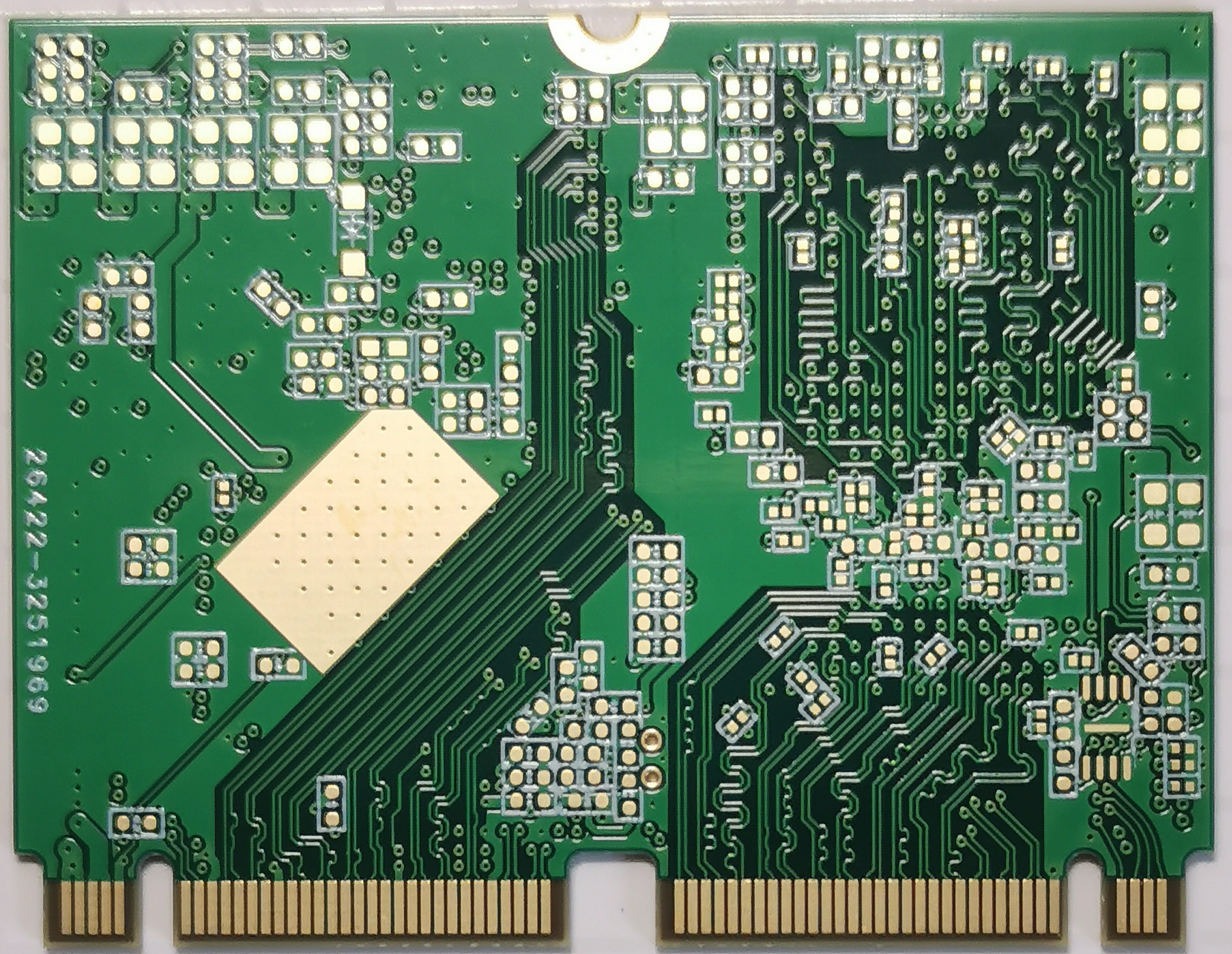
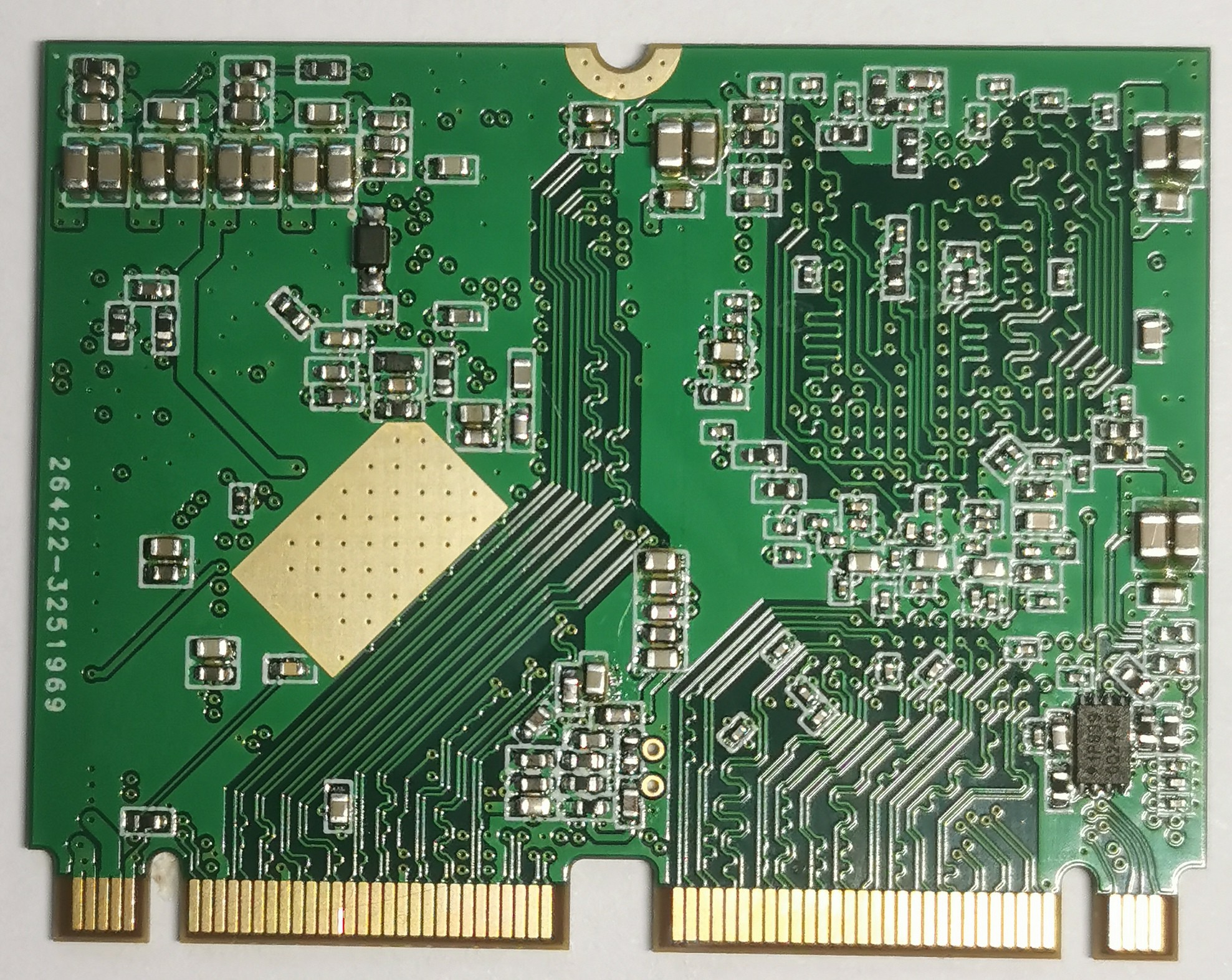
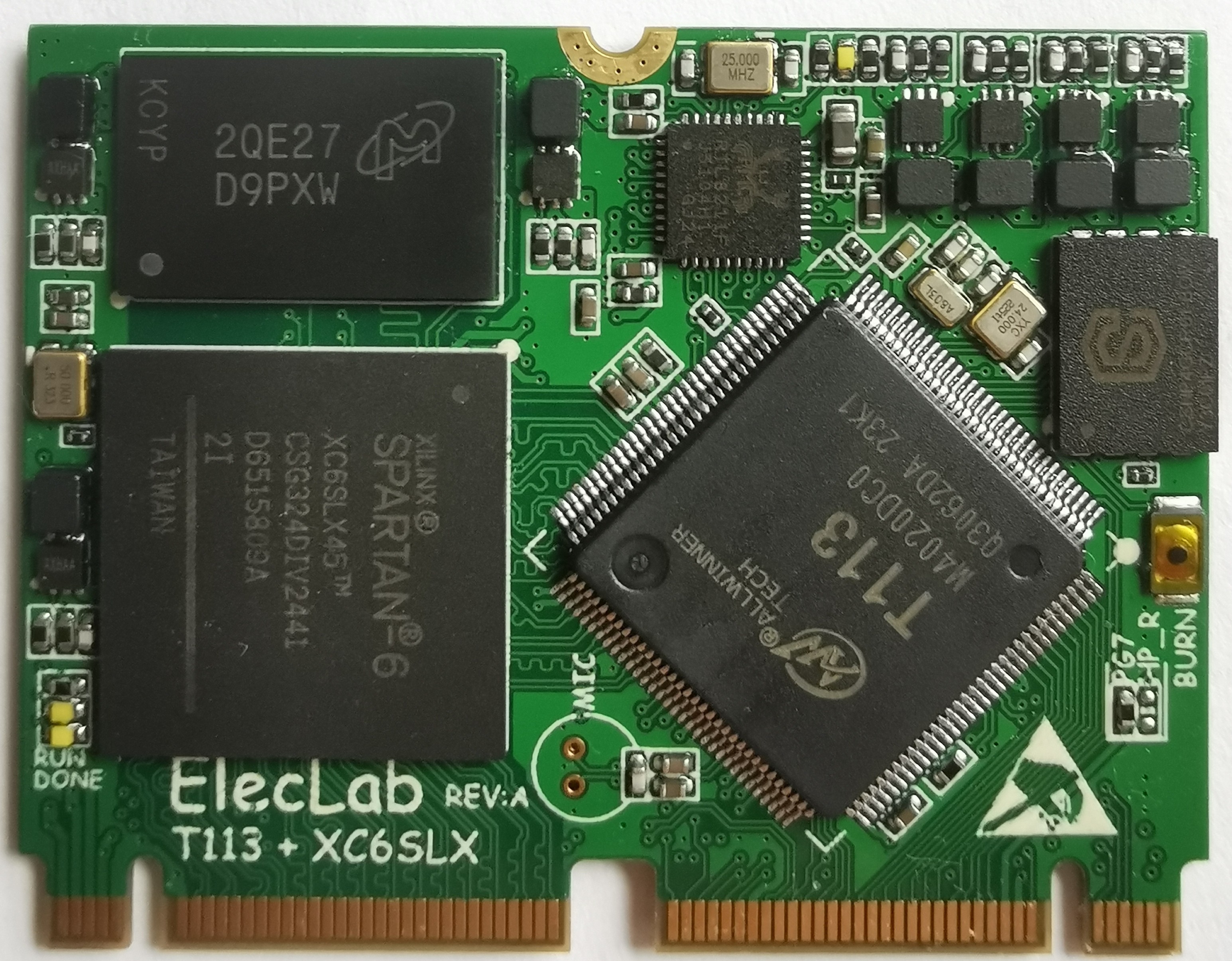
    T113-S4+XC6SLX25 core board

    The FPGA part is exactly the same as the RK3506G2+XC6SLX25 core board.

    T113-S4 integrates MIC, and the NGFF interface part leads to 4Lanes MIPI DSI/2XUSB/1x1000Mbps PHY/SDIO/audio headphone output/18xIO/1xGPADC.

    We will upload the Kicad schematic, but the Kicad file of the PCB will not be open source for commercial reasons.

    It is already in the PCB production process and will soon be able to come back for welding.

    I received the empty PCB.

    The component on the back has been welded, and the 0201 component is challenging.

    The components on the front of the PCB are installed. We have tested the functions of FPGA and DDR3. It works normally. The next step is to test the function of T113-S4.

    The output resolution of T113-S4 can reach 1920x1200, so it can drive the display of multiple screens relatively well.

View all instructions

Enjoy this project?

Share

Discussions

Similar Projects

Does this project spark your interest?

Become a member to follow this project and never miss any updates