Close
0%
0%

LoRaTube

A compact and rugged LoRa repeater designed for long-range communication and 5+ years of off-grid operation using only alkaline batteries.

Similar projects worth following
In France, on the 433 MHz ISM band, the ANFR enforces a maximum transmission power of +10 mW ERP (≈ +10 dBm); any attempt to increase range by raising the output power is illegal. However, the LoRa modulation was designed with very high sensitivity in reception (up to –137 dBm in SF12 / 125 kHz), which corresponds to a radio link budget of at least 150 dB. Under optimal propagation conditions (open field with no obstacle, line of sight), this link budget is enough to span tens of kilometers.

That’s why a repeater is necessary: to fully exploit the available link budget and reach long distances, the transmitter’s location must be carefully chosen. By placing the repeater at a high point — a hill, tower, or treetop with a clear line of sight — a single module can cover several tens of kilometers without exceeding the legally allowed transmission power. This strategy is at the heart of the LoRaTube concept: keeping a compliant, very low-cost, discreet, and autonomous transmitter (> 5 years), while maximizing coverage through optimal placement.

Why LoRaTube?

Because this project does not use solar panels — it relies instead on alkaline batteries housed in a PVC tube. Most LoRa repeaters (whether DIY or commercial) depend on solar panels paired with lithium-ion batteries, MPPT regulators, and charge management circuitry.

This leads to:

  • a high cost (often €150 or more);

  • some mechanical and electronic fragility;

  • a bulky footprint, making the device more visible and attractive to theft;

  • and above all, poor reliability in winter: in temperate climates, solar production can drop fivefold between summer and winter, forcing designers to oversize the system just to maintain basic service.


What We’re Proposing – Design Objectives

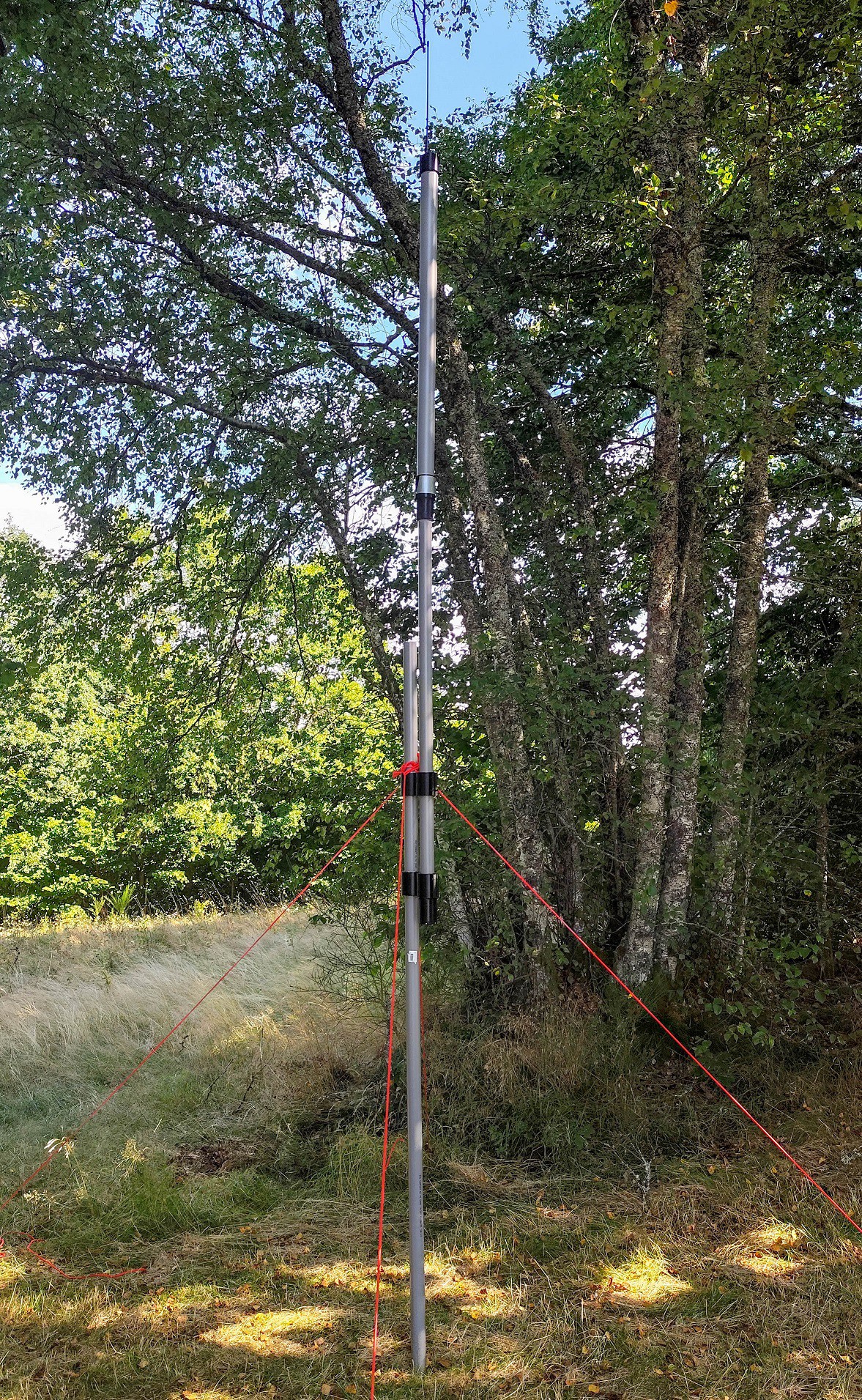
The goal is to build an ultra-discreet, robust LoRa repeater using widely available and very low-cost materials — specifically alkaline D-size (LR20) batteries and standard 40 mm / 50 mm PVC pipes for the enclosure and mast. The system is designed to run for multiple years in outdoor environments, including locations with no sunlight (under vegetation, in barns, etc.), for under €50 total, including the LoRa module and enclosure.

Note: This is version 1 of the device, and it is not yet final.
It provides around 2 months of autonomy, but it has already helped validate key design choices (mechanical layout, RF range, propagation testing).
A version 2 PCB is currently under development, with improved autonomy and resilience — including a watchdog, hardware timer, and complete shutdown of the Pico and buck converter between active phases.
Feel free to reach out if you have suggestions, improvements, or strong electronics skills — I'd be happy to discuss it.

Note 2: We are currently editing a video showing real-world radio propagation tests with the LoRaTube installed at Suc au May.
👉 It will be added to the logs soon.

                      ______________________________________________________________

🔋 Power Supply

The power supply is based on 18 LR20 alkaline batteries (D size) in series, housed in a compact enclosure less than 50 mm in diameter.
This battery choice offers several practical advantages: LR20 cells are inexpensive (less than €1 each in most supermarkets) and widely available. Each LR20 battery typically provides 12,000 to 18,000 mAh, or 18 to 27 Wh. With 18 batteries, the total energy amounts to approximately 486 Wh, for a total cost of €13.30 (5 packs × €2.66), which translates to just ~€0.024/Wh — a ridiculously low cost compared to lithium alternatives.

For comparison:

  • A 18650 lithium cell offers ~11 Wh for ~€4 → €0.36/Wh (15× more expensive)

  • A pack of ten flat lithium cells (~52 Wh) costs ~€20 → €0.38/Wh
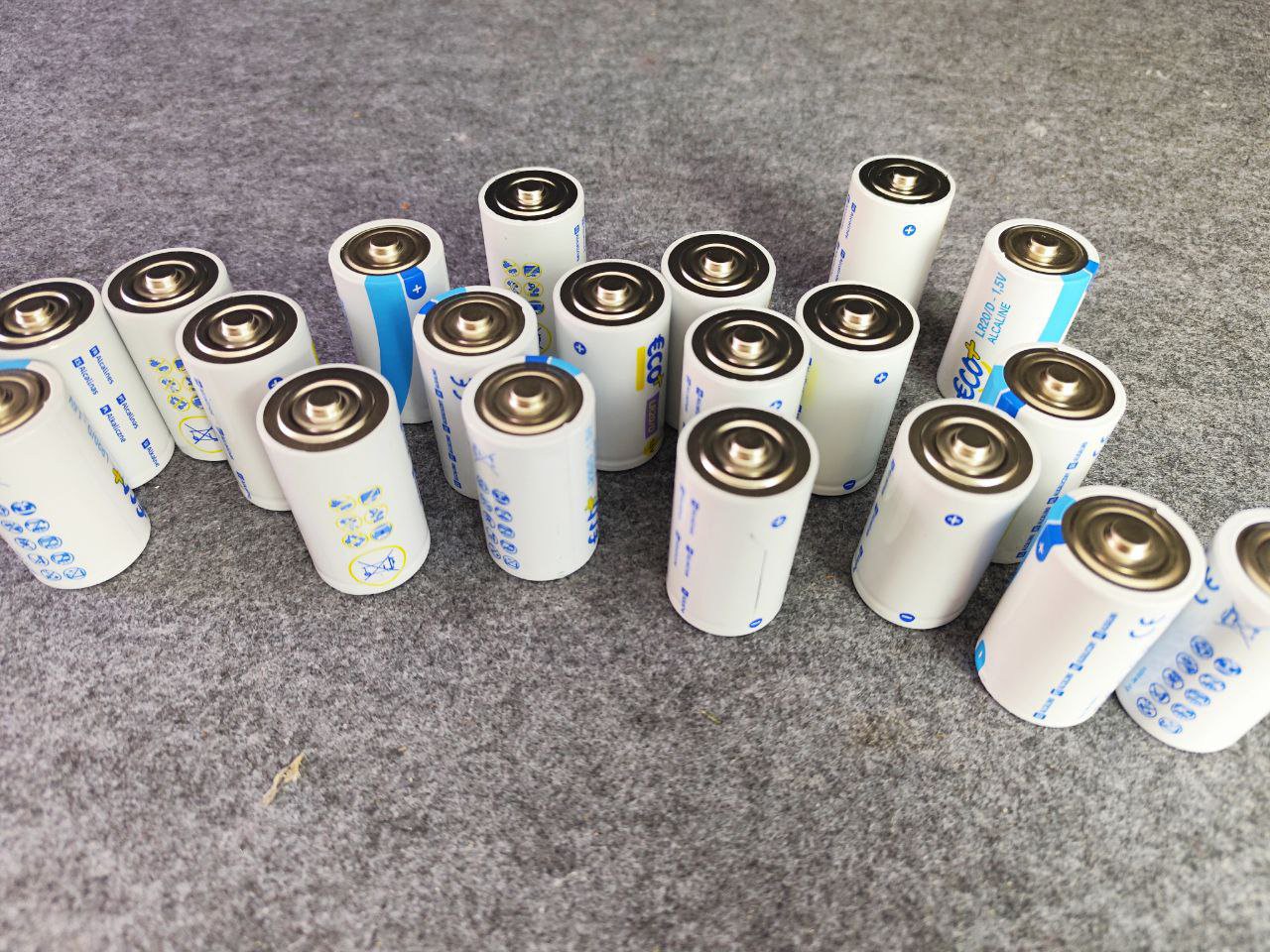
Wiring 18 batteries in series raises the voltage to 27 V (18 × 1.5 V). The cost per delivered kilowatt-hour remains extremely competitive: around €13/kWh, compared to over €250/kWh for a solar + lithium setup (including MPPT regulator) — a 20× cost advantage.

These batteries also have very low self-discharge (< 1% per year), enabling several years of operation as long as the current draw stays low.

Another benefit: the batteries fit neatly inside a standard 40 mm...

Read more »
PickAndPlace_PCB_V4-LoraTube_2025-11-02.csv

ms-excel - 22.76 kB - 11/02/2025 at 17:23

Download

Gerber_V4-LoraTube_PCB_V4-LoraTube_2025-11-02.zip

x-zip-compressed - 179.50 kB - 11/02/2025 at 17:23

Download

BOM_V4-LoraTube_2025-11-02(1).csv

ms-excel - 12.11 kB - 11/02/2025 at 17:22

Download

Schematic_V4-LoraTube_2025-11-02.png

Portable Network Graphics (PNG) - 222.81 kB - 11/02/2025 at 17:17

Preview

LoRaTUBE V3.json

JavaScript Object Notation (JSON) - 1.54 MB - 10/05/2025 at 06:51

Download

View all 20 files

  • 1 × PI PICO
  • 1 × EBYTE E22400T22D module LoRa UART at 22dBm
  • 1 × MP2451 buck converter for the 5V bus tension
  • 1 × MAX8212 voltage supervisor to trig the voltage in supercapacitor
  • 1 × TPS2553 current limiter to reduce current in supercapacitor

View all 14 components

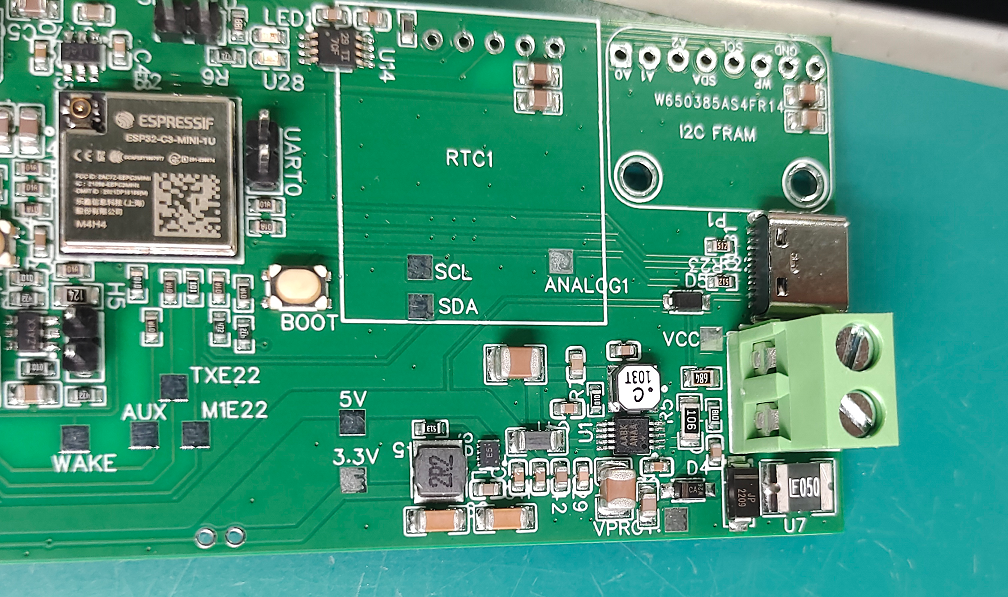
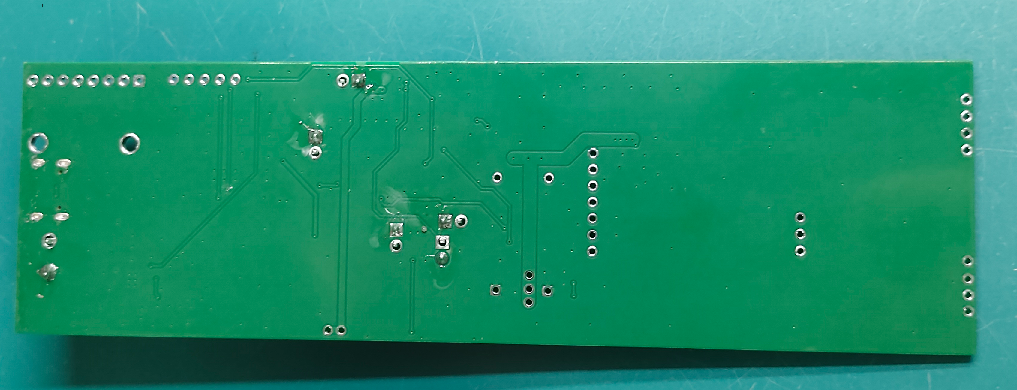
  • Pictures of the Assembled PCB for the LoRaTube V4

    Bertrand Selva11/17/2025 at 09:53 0 comments

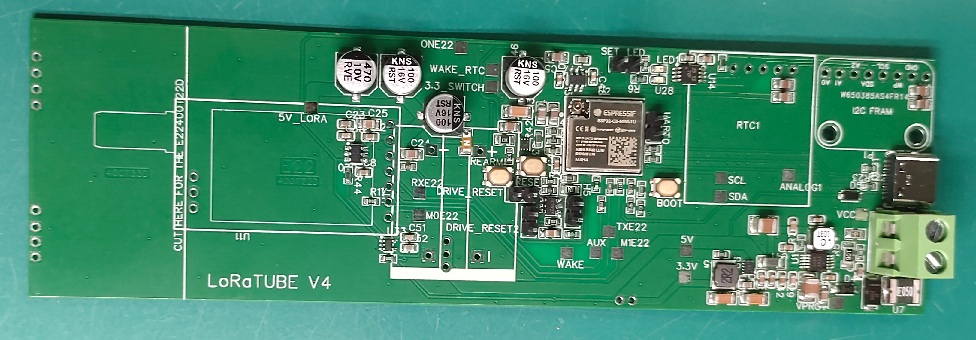
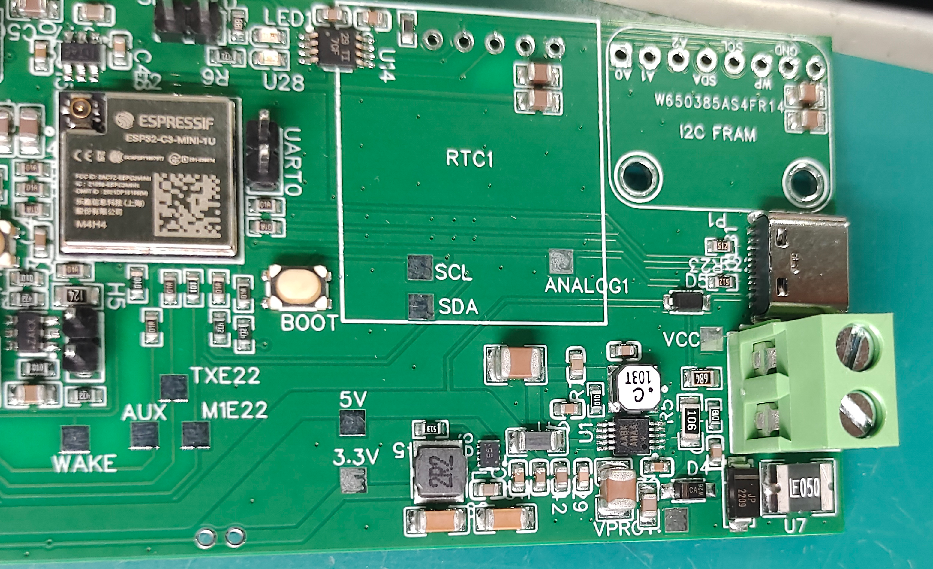
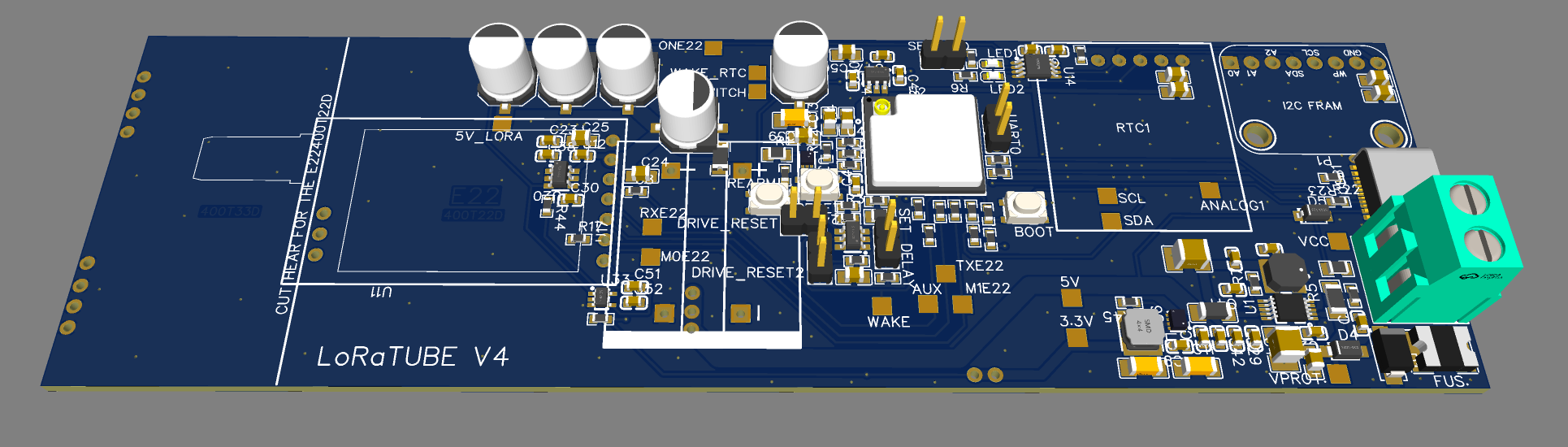
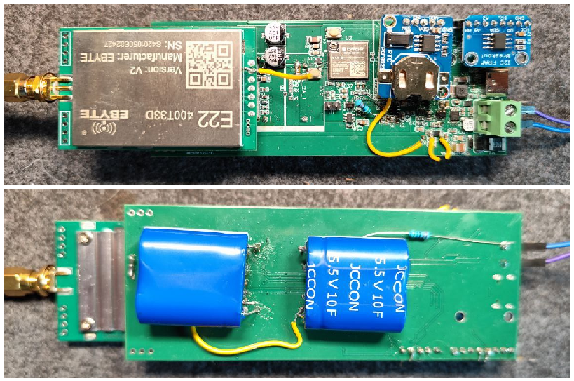
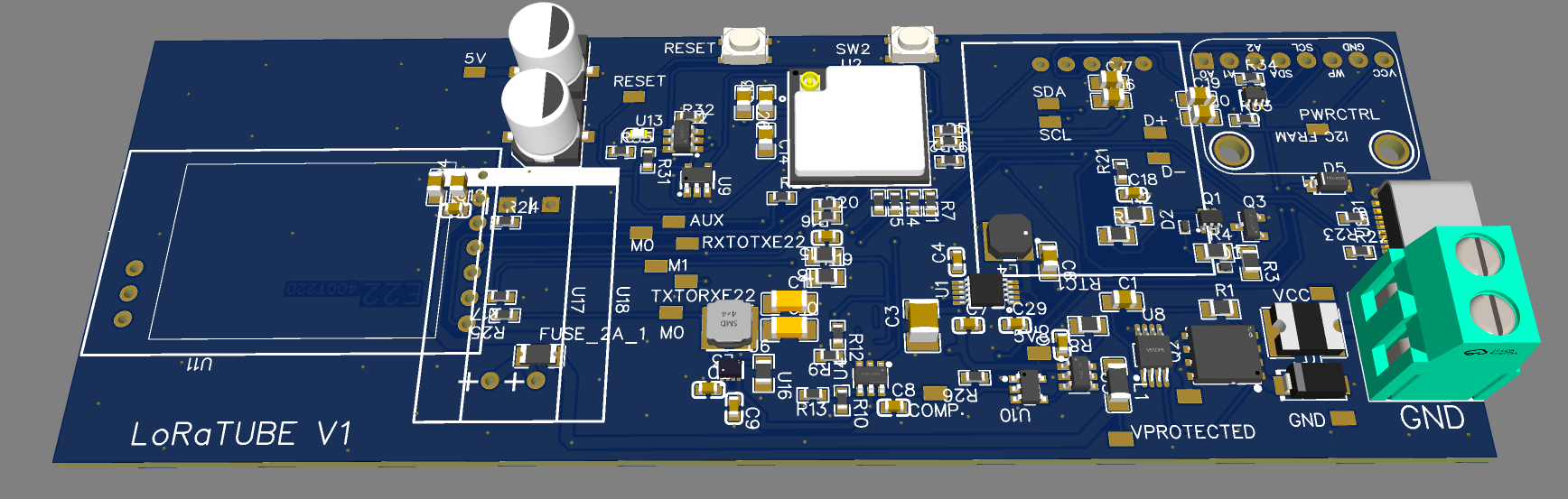
    Here are a few photos I received this morning of the fully assembled PCB, manufactured by PCBWay.
    This is Revision V4.

    The build quality is excellent ; clean soldering, crisp edges, and a layout that finally looks exactly as intended.

    Once the board is in my hands, I will publish a detailed bring-up report for this V4 revision as for the V3 revision: power-on tests, rail validation, firmware loading, radio checks, and early measurements.

    More to come.


  • V4 IN PRODUCTION

    Bertrand Selva11/04/2025 at 09:20 0 comments

    The Gerbers and BOM have been sent to production : the V4 is now in production.
    This revision marks, I hope, the closure of the hardware development phase and the beginning of firmware optimization.

    Next phase: 

    • bring-up of the V4 in few weeks 
    • firmware (il everything is OK) : Focus will shift to thefinite-state control, FRAM ring buffer, and the orchestration of wake/sleep cycles with deterministic timing and energy budgets.

    Many thanks again to PCBWay for their continuous support in this next iteration.

  • FRAM Data Logging Specification

    Bertrand Selva11/02/2025 at 22:56 0 comments

    Purpose and Memory Technology

    Logs are critical for monitoring LoRaTube, confirming real-world performance over time, and, if necessary, identifying failures or design flaws.

    This document records the reasoning and choices that led to the selected memory technology. The aim is to ensure reliable long-term logging with minimal power consumption and maximum resilience.

    SD cards, though common in consumer projects, were ruled out. Their fragility is well known: rapid cell wear, poor reliability over long periods without activity, unpredictable wear-leveling, and a tendency to become corrupted or unwritable after power loss. Random corruption, freezes, access slowness, and inrush current are all deal-breakers for an ultra-low-power, resilient system.

    Serial EEPROMs were also considered. They are inexpensive and widely available. However, their endurance is limited (typically one million write cycles per cell, much less in harsh temperature conditions), and write operations are page-based, which is not well-suited for the intended logging patterns. Write times can be significant, increasing the risk of data corruption during resets or brownouts. Data retention is often not guaranteed beyond a few years, especially with wide temperature variations.

    SPI Flash offers large storage but shares many drawbacks: limited endurance, mandatory page erase before writing, complex software wear-leveling, and a real risk of “bricking” the chip if power is lost during write operations. Frequent updates to a few bytes always force a compromise between wear and software complexity. Additionally, available pin count on the C3 is limited, with no other active SPI devices in the design.

    FRAM (Ferroelectric RAM) emerged as the solution. Key features:

    • Very fast access (read/write in a few microseconds)
    • No write latency
    • Virtually unlimited endurance (ideal for frequently updated counters)
    • Very low operating power

    FRAM requires no pre-erasure or software wear-leveling, never blocks on sudden power loss, and provides full-speed access regardless of the frequency or distribution of writes. Data can be written or read byte by byte. It is also known for its resistance to EMI, and data retention exceeds ten years, making it well suited for embedded data loggers requiring high reliability.

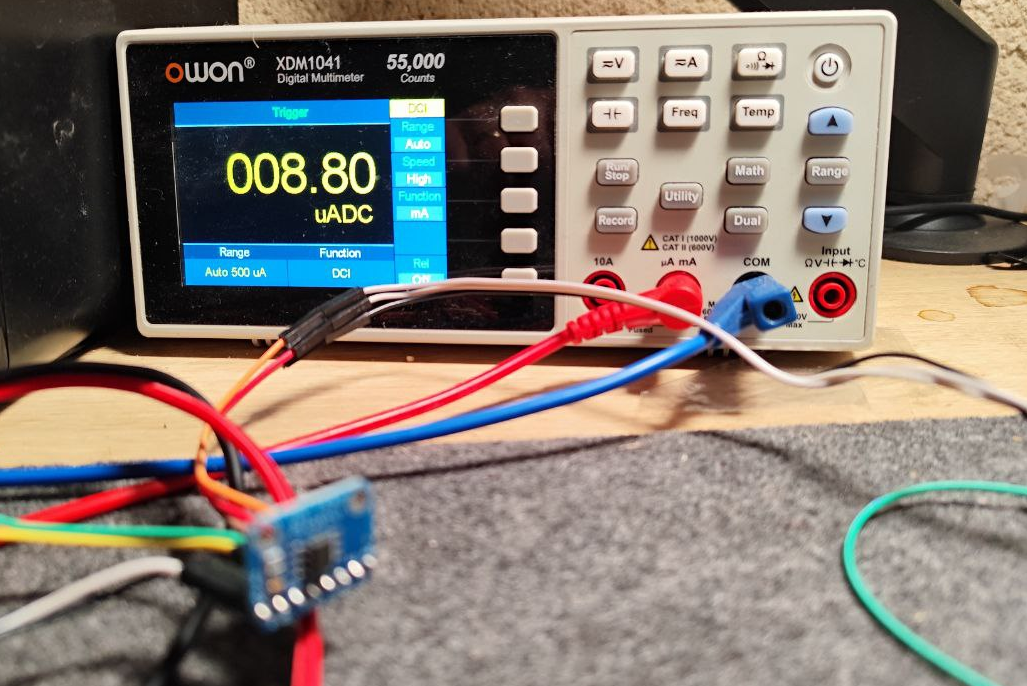
    There are two minor trade-offs: the chosen device (one of the few available on Aliexpress) draws about 9 µA in idle. While this is low, it is not entirely negligible over several years. 


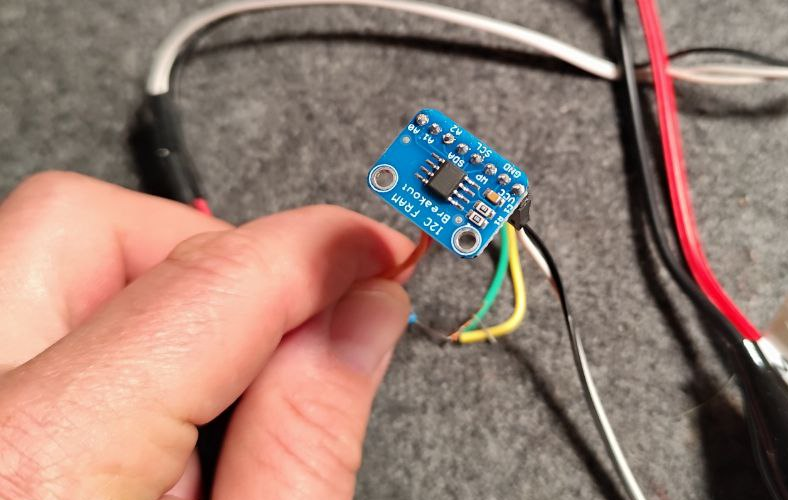
    The FRAM is mounted on a large breakout board and is installed via female headers, allowing easy extraction for content analysis without soldering.


    Daily Log Format (16 bytes, little-endian)

    Available storage is 32 kB, so a daily log format with counters was selected. Counters are stored directly in FRAM to take advantage of its resilience to repeated writes and absence of paging.

    Assuming a five-year lifespan:

    32 kB / (5 years × 365 days/year) ≈ 17 bytes per day.

    The chosen log format is 16 bytes per day:

    Field Bytes Description
    timestamp 4 Unix UTC (seconds)
    midnight_temp 1 Temperature at midnight (−15…+35 °C normal, −50…+70 °C if TEMP_EXT=1)
    midnight_voltage 1 Main voltage (Vbat/Text, 10–32 V, LSB ≈ 86 mV)
    noon_temp 1 Temperature at noon (RTC or nearest sample)
    noon_voltage 1 Voltage at noon (same rule)
    wake_rx 2 Number of radio wake-ups, saturates at 0xFFFF
    ratio_rxtrue_per_wake_q8 1 Q8 ratio: (REVEIL_RADIO == 0) ? 0 : clamp(round(255 × TRUE_RX / REVEIL_RADIO))
    ratio_tx_per_rxtrue_q8 1 Q8 ratio: (TRUE_RX == 0) ? 0 : clamp(round(255 × TX / TRUE_RX))
    flags 1 See below
    noise_min_dbm 1 Min radio noise, −130…0 dBm (LSB ≈ 0.51 dB)
    noise_max_dbm 1 Max radio noise
    crc8 1 CRC-8 with first 15 bytes

    Ratio Calculation (bytes 7 & 8)...

    Read more »

  • GERBER FILES FOR V4

    Bertrand Selva11/01/2025 at 15:12 0 comments

    You will find the Gerber files, the component placement file, the BOM, the schematic, and the EasyEDA JSON edit file for V4 in the project files.

    The PCB will go into production for this V4, once again thanks to PCBWay. Their ongoing support makes this project possible.

    Bring-up is scheduled in a few weeks.

  • PCB V4

    Bertrand Selva10/30/2025 at 11:46 0 comments

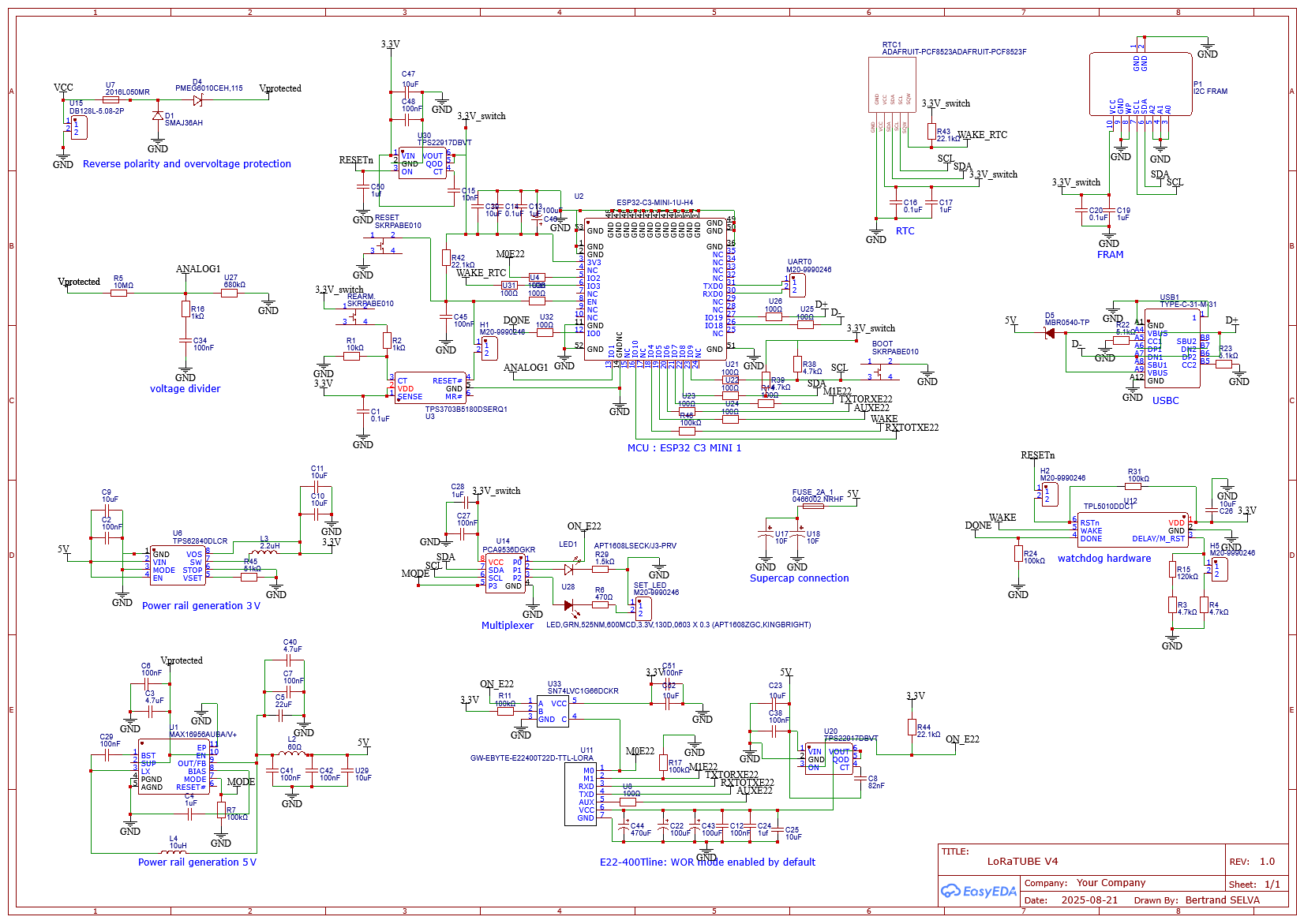
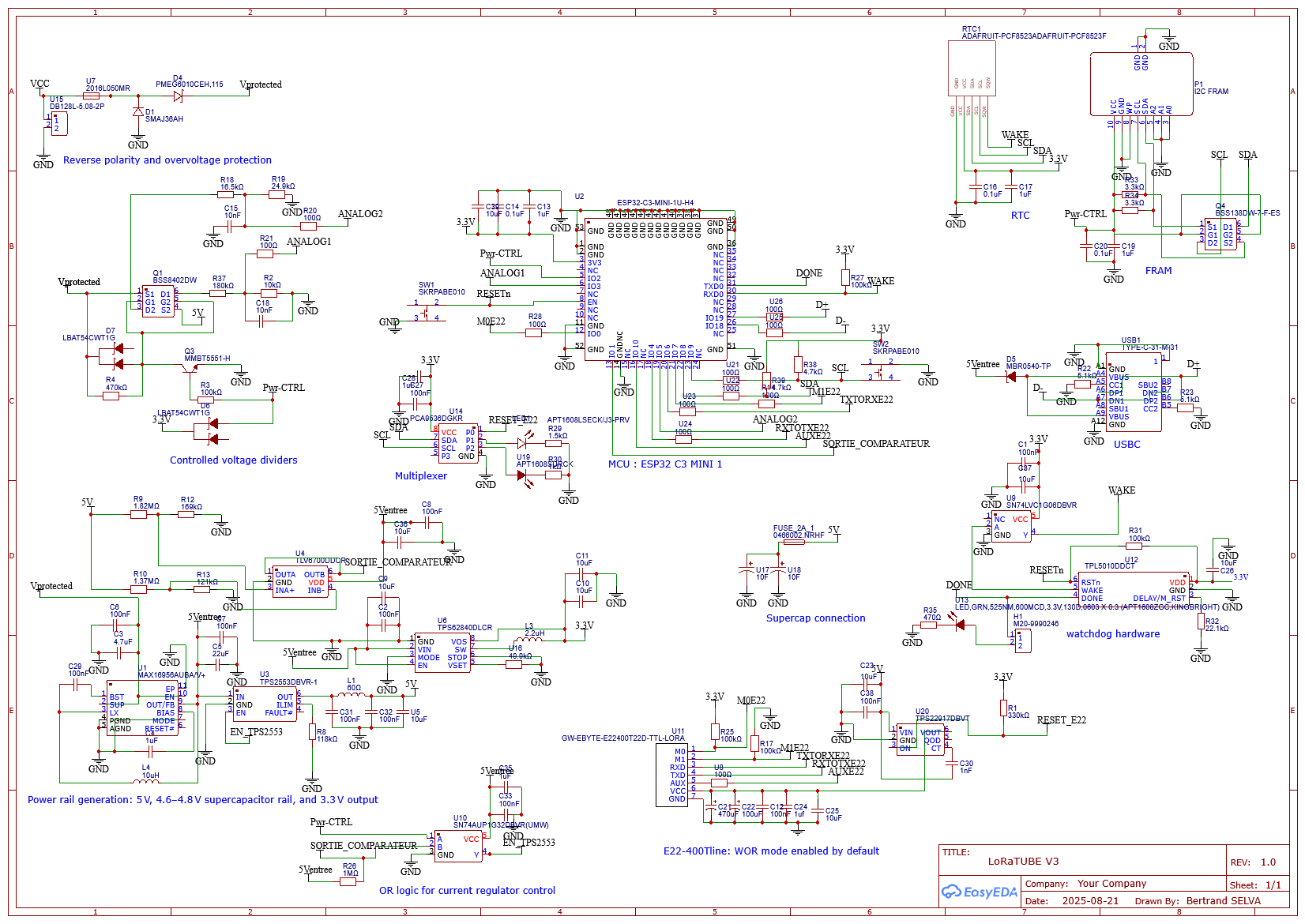
    Here is the schematic for V4.

    Changes from V3 / Design decisions

    I changed my mind on some aspects when redoing the schematic, compared to what I had announced.

    Notably, I kept the possibility to wake up the MCU via the RTC because it offers more resilience. In fact, I now have three perfectly independent ways for wake-up: 

    • WAKE_RTC, with the RTC alarm; 
    • WAKE from the TPL5010 (hardware watchdog); 
    • AUX from the E22.

     And I no longer have an OR-wire on the wakes, which allows removing the inverter that was previously on WAKE RTC, to "read" explicitly in software the source of the wake-up, and also to offer an extra pin from the MCU for the interrupt (more resilience). All the pins for deep sleep wakeup interrupts are wired between IO0 and IO5 (the only compatible pins).

    This new wake-up architecture is allowed by freeing several pins, made possible by the overall simplification of the schematic: notably, no more management of the comparator state (because no more comparator here: the 5 V buck is always connected to the supercap), no more management of the FRAM power (the FRAM was measured in idle at 9 µA, which is 0.2% of our energy budget over 5 years). So there is no need to bother managing whether the FRAM is powered or not, nor the ghost currents on I²C when it is off (that means fewer components).

    Memory and logging : Fram vs EEPROM

    Concerning the choice of FRAM, I hesitated a lot to switch to EEPROM on I²C. But the big advantage of FRAM is being able to serve both for logging and counting, without using the RTC RAM of the C3 (more resilient, the functions are well separated). And the absence of paging also makes the use of memory more efficient. The planned daily logs are 16 bytes and will be detailed in the next log.

    Watchdog & Debugging improvements

    The TPL5010 has not really changed in its implementation except that there is now a jumper to change the delay resistance. With jumper H5 activated, the resistance drops and gives delays of ~2 min: much simpler for debugging and firmware writing.

    E22 interface & power rails

    I added decoupling capacitors for the E22. M0 of the E22 is associated with a pull-up as before, which makes its use compatible with IO02 of the MCU (new assignment) which must be kept high at MCU startup.

    The multiplexer resumes responsibility for the two LEDs present (not three as before). The green LED is always switchable by jumper (to facilitate maintenance without useless consumption). The multiplexer also manages the MODE of the 5 V buck: it will now be possible to exit the "eco" mode of the buck to limit RF noise, as soon as a first reception is detected or a transmission is in progress.

    Power management and voltage adjustments

    The 3 V buck has not changed except for one detail: the VSET resistor. At 49.9 k it was out of spec to start the buck at 3.3 V; it was starting at 3.0 V. I hesitated to modify it because it saves ~10% on the 3.3 V rail. At the same time, it gets me closer to brown-out in very cold weather, and the current is very low on this rail except during MCU activity periods. So I changed the resistor to go back to 3.3 V.

    One of the voltage dividers has been removed. The other is always active. A C34 capacitor has been added to allow a stable reading despite the very high impedance of the divider. The R16 resistor functions to limit the current at the moment of analog sampling and to protect the ADC stage of the ESP32; it also helps dampen charge injection from the ADC’s sample/hold, and with C34, to reduce HF transient spikes.

    The input stage has not changed: fuse to limit current, voltage clamp at 36 V, diode to prevent back-current and manage polarity inversion issues.

    MCU I/O allocation

    For the MCU, I added decoupling capacitors to better manage brownout risk. IO02, IO08, and IO09 are assigned to tasks compatible with a high state at startup, as expected for a functional boot with the C3. The serial TXD0...

    Read more »

  • LoRaTube V3 Hardware Bring-Up : Power Rail Debug & Path to V4

    Bertrand Selva10/26/2025 at 16:13 0 comments

    I received the PCB assembled by PCBWay. The board looked great, assembly quality is excellent. After a complete test session, the board already has several straps and modifications. This is the fate of any prototype: direct confrontation with hardware reality. 

    All critical subsystems (buck, supercap, LoRa, I²C, MCU, watchdog) are validated.
    Despite the modifications made, the current board enables almost complete firmware development and should reliably support the first real-world tests.

    Hardware test program is available on my GitHub: https://github.com/Bertrand-selvasystems/LoRaTube_V3_PCB_Test

    This prototype clearly calls for a version 4. I've listed the required changes as I went along. All modifications aim for further simplification: fewer components, a simpler architecture.

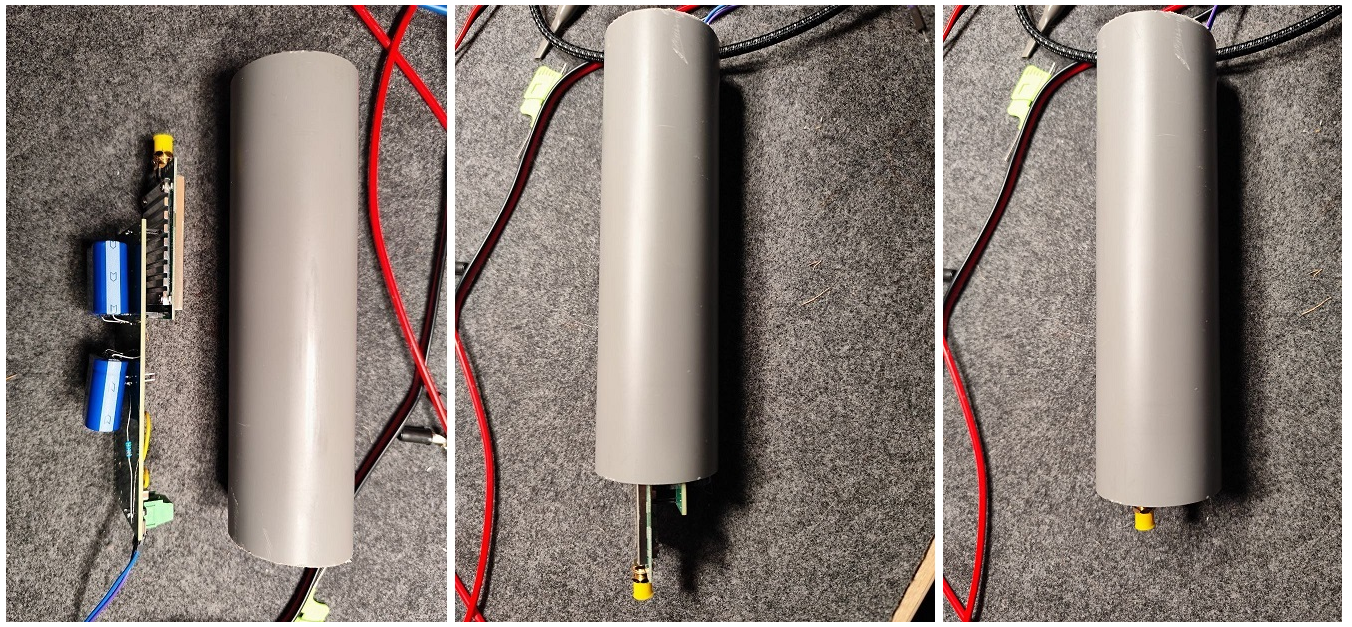
    Mechanical fit

    It must fit into the 50 mm tube (otherwise it’s no longer LoRaTube). And it does. It’s tight, but OK.

    First Power-Up and Power Rail Changes

    At first, nothing worked: the MAX16956AUBA/V+ buck provided permanent 5 V, the TPS62840DLCR gave 3 V, but the supercaps wouldn’t charge. Direct start-up on empty supercaps was impossible without manually toggling EN (using a signal generator) after precharging them manually. After precharging to about 3.7 V, EN_TPS2553 started working via PWR CONTROL, with currents around 220 mA at 12 V.

    Comparator TLV6700 — Threshold Verification

    The TLV6700 was not handling EN_TPS2553 correctly. Measured voltages:

    Node Measured (V) Vcap (V) Divider Ratio Equivalent Threshold (V)
    U4_3 (INA+)0.3183.800.0837≈ 4.78 V
    U4_4 (INB−)0.3053.800.0803≈ 4.98 V

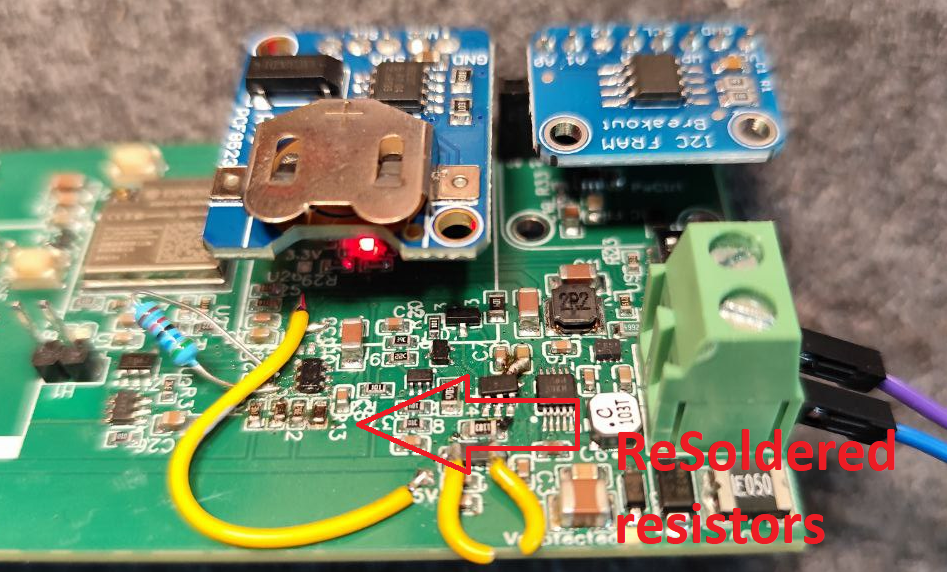
    Pull-up R26 was suspected (too high impedance), keeping the comparator output stuck at 0 V.
    I soldered a resistor in parallel with R26 and I swap the resistors between INA+ and INB− entries as shown in the photo.

    After swapping INA+ and INB−, the problem persisted — EN output was still stuck low.

    Other mistake : The SN74AUP1G32DBVR (logic OR) was powered at 5 V, though rated only for 3.3 V — a design mistake. Yet, when forcing PWR CTRL high, EN responded correctly.

    I later realized the root cause: a fundamental logic flaw. The dual comparator alone cannot hold a hysteresis (no latch). Expected behavior:

    • Enable EN_TPS2553 when voltage < 4.78 V.
    • Keep ON until 4.98 V, then disable.
    • Let voltage drop naturally to 4.78 V, then restart charge.

    A latch is required to achieve this, and it was missing. It's a design mistake...

    To continue testing, I connected MAX16956AUBA output directly to the supercap. Current rose to 220 mA @ 12 V during initial charge, then tension stabilized around 5.01 V and current become very low.

    For V4: Remove current regulator, comparator, and logic OR. Leave MAX16956 in SKIP mode — direct charge. 85 mA charge current @ 30 V (TX/recharge phases) → OK 
    MAX16956 rated 300 mA continuous / 500 mA peak — acceptable for duty cycle.
    Improve thermal dissipation around MAX16956.

    TPL5010

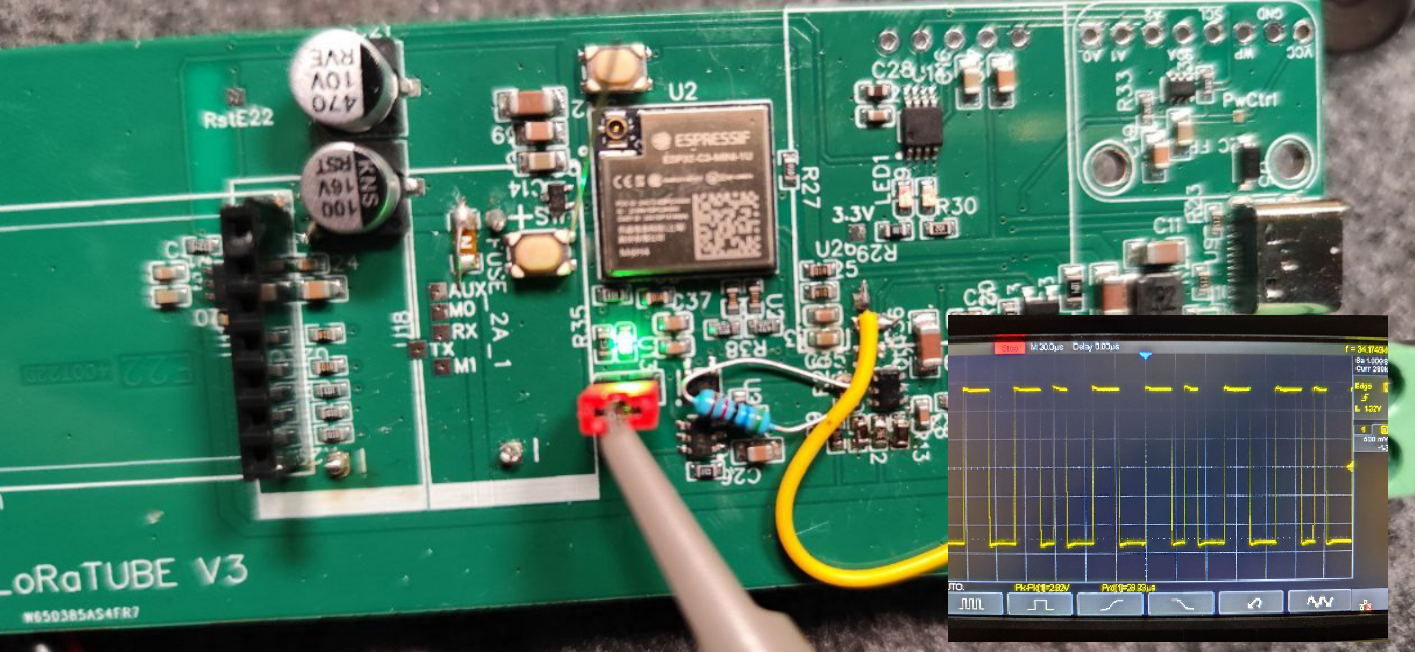
    A MCU GPIO was supposed to drive the DONE input of the TPL5010 watchdog (“service dog” function). The LED associated with the DONE line, supposed to indicate MCU activity, remained constantly on. When measuring the voltage, there was an oscillation between both states, at a frequency of a few tens of kHz.

    Pin 31 of the ESP32-C3 MCU is TXD0 (U0TXD), which is a UART output (push-pull, idle high, and “talks” at boot and in log mode). It is impossible to distinguish a true “service dog” activity from simple UART flood: the pin must be changed.
    I still, for testing, short-circuited the TX0 output with a 47-ohm resistor (borderline for the health of the pin), just long enough to verify that the TPL5010 correctly cycled RSTn. And it does, with a period of roughly 1 minute – so that part works.

    The behavior is completely validated: when DONE is “tickled” by UART0, RSTn never goes low.

    For version 4: Add a...
    Read more »

  • Updated files LoRaTube V3

    Bertrand Selva10/05/2025 at 06:57 0 comments

    The latest files for V3 — the version currently in production with PCBWay  — have been uploaded (in the files project).

    The archive includes the schematic, Gerber files, Pick and Place data of the V3.

  • Pictures of the Assembled PCB for the LoRaTube V3

    Bertrand Selva09/29/2025 at 10:03 2 comments

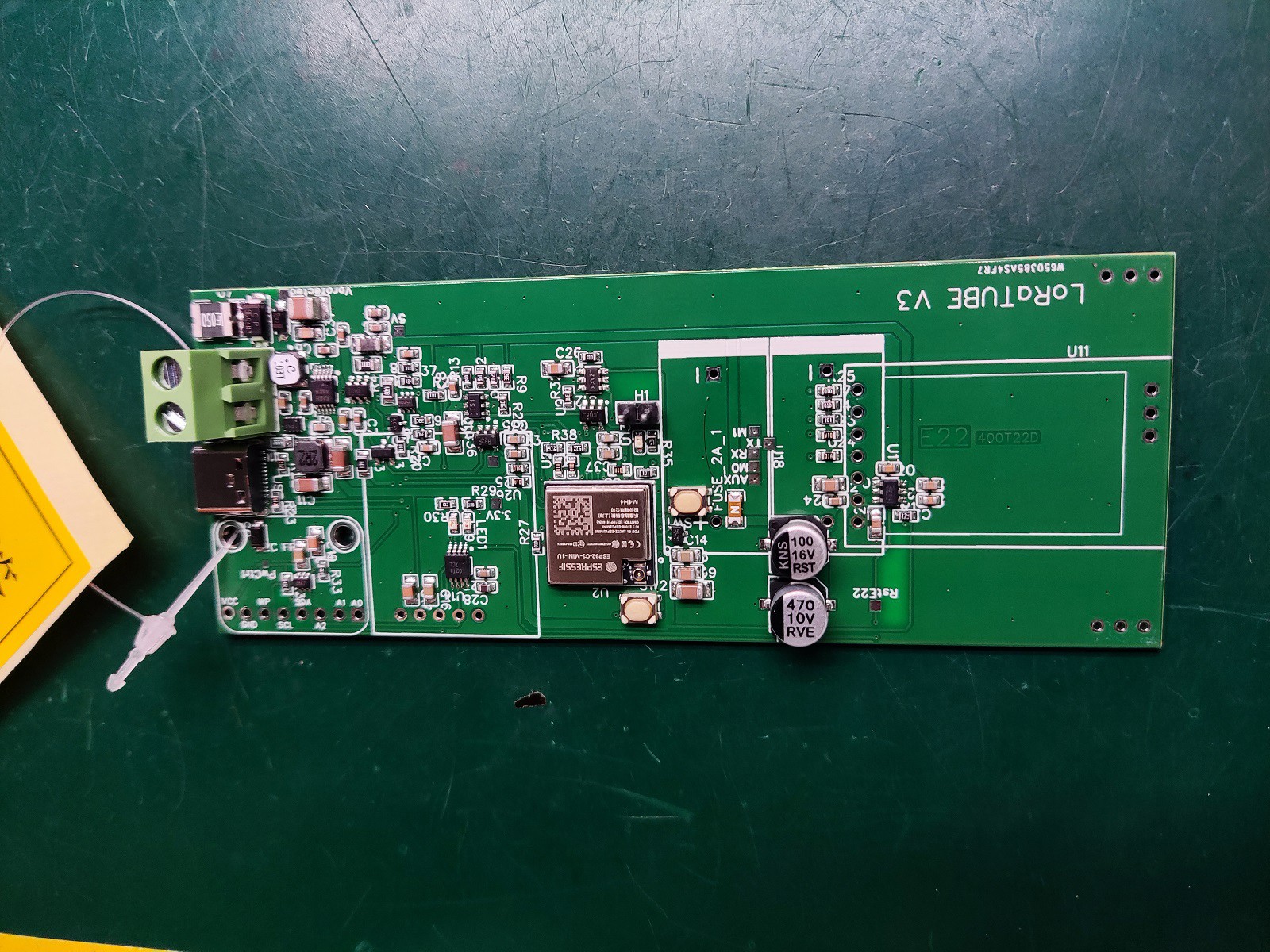
    Here are some photos I received this morning of the assembled PCB, manufactured by PCBWay.

    This is version V3. All related files are available in the project repository.

    It’s a cool moment to see the physical board assembled. The result looks very nice.

    I’ll post a more detailed log with first debugs/tests as soon as I receive the board in hand.

    I don't no why but I can't put new photos on my log. So, please find the following links : https://github.com/Bertrand-selvasystems/pictures_PCB_loratube/blob/main/


  • PCB sent for assembly & production (LoRaTube V3)

    Bertrand Selva09/12/2025 at 12:35 0 comments

    The PCB order (including component assembly) has been sent to production today.
    Thanks to PCBWay for supporting the project and for reviewing/validating the BOM.

    I’ve updated the Gerbers and other related files in the project (V3).

    Once I receive the board, I’ll share the debugging and testing process in a new log, along with a YouTube video.

    The next update should come in about thirty days...

  • Schematic description (LoRaTube V2)

    Bertrand Selva09/05/2025 at 12:35 0 comments


    First of all, thanks to Christoph Tack for the extensive reviewing and the valuable feedback on the schematic. One major change came from his advice: the new architecture drops the Pi Pico and runs instead on an ESP32-C3 MINI, which is much more suited for ultra-low-power profiles.

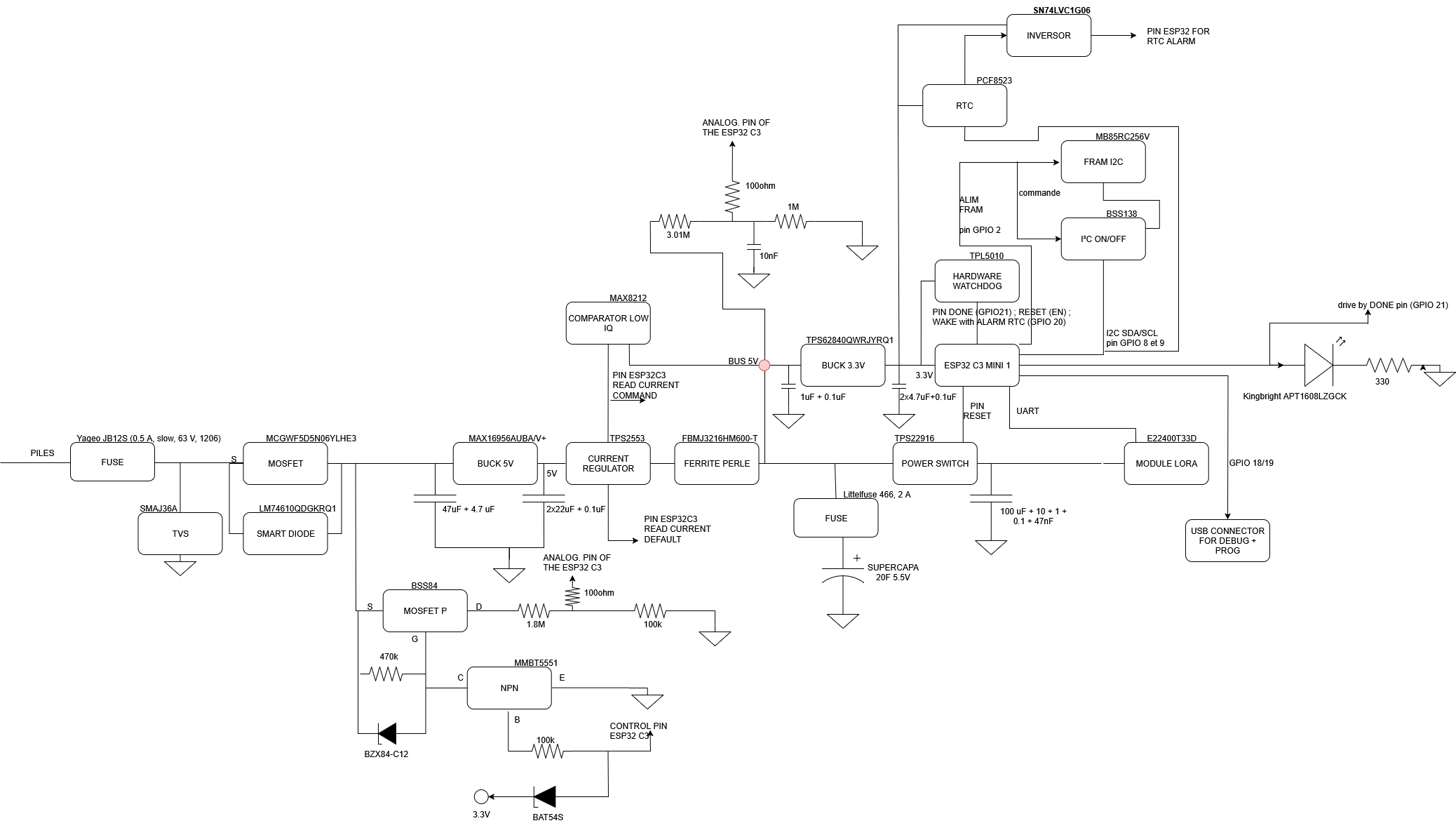
    The power path starts from a 20–30 V pack of alkaline batteries. The input is protected against reverse polarity and surges by an LM74610 ideal diode and a TVS diode (SMAJ36AH). A MAX16956 buck converter then provides a regulated 5 V rail, always on.

    On this 5 V line sits a TPS2553 current limiter, set to about 250 mA (R_ILIM ≈ 118 kΩ). This limiter is mandatory because the supercapacitors are placed after it, directly on the 5 V bus.
    During LoRa TX bursts, the E22-400T33D can draw up to 1.3 A. Thanks to their low ESR, the supercaps deliver this current. But when they recharge, the limiter ensures the source current stays below 250 mA (~70 mA on the battery side).
    This low recharge current is critical: it is compatible with end-of-life alkaline packs or very cold conditions, and it even improves autonomy—lower current means more usable energy can be extracted from the cells.

    The supercap charging is supervised by a TLV6700 comparator (previously a MAX8212 in V1). It cuts charging at 4.90 V and re-enables it below 4.75 V, stabilizing the bus around 4.8 V. This is high enough for reliable E22 operation but low enough to minimize supercap leakage, which increases with voltage and temperature.

    From this 5 V rail, a TPS62840 ultra-low Iq buck generates the permanent 3.3 V rail. This powers the ESP32-C3, the TPL5010 watchdog, the PCF8523 RTC, and the FRAM memory.

    • The RTC is always powered, mainly to use its alarm output, wired together with the TPL5010 WAKE through an open-drain buffer.

    • The FRAM (≈ 27 µA continuous consumption) is physically disconnected when not logging, using MOSFET switches to avoid phantom powering through the I²C bus.

    Two high-impedance resistor dividers allow monitoring of both the input (30 V) and the 5 V bus. The high-voltage divider is switched by a P-MOS/NPN combo for ESP32 safety.

    The LoRa E22 module runs directly from the supercap 5 V bus. The ESP32 supervises the radio: if the module becomes unresponsive, a hard reset circuit can force recovery (still pending in this version).

    The watchdog (TPL5010) resets the ESP32 if it fails to toggle DONE within 10 s. The firmware kicks it every 8 s, and the DONE line also drives a small green LED, flashing 100 ms every cycle—visible but still energy-friendly.

    Protections are layered:

    • SMAJ36AH TVS for surge,

    • Polyfuse 2016L050MR set at 500 mA for the input,

    • LM74610QDGKRQ1 ideal diode for reverse polarity and blocking back-feed to the cells,

    • 2 A fuse on the supercap path.

    Finally, a USB-C connector allows ESP32 programming and log extraction. Two tactile switches let you force BOOT mode or reset, just like on a standard devkit.

    PCB


    The board is designed to slide into a 50 mm PVC tube. Target outline is 45 mm wide × 125 mm long to leave insertion clearance.



    • Assembly: all components are placed on the front side; the supercapacitors are mounted on the back side.

    • Minimum trace width: 0.256 mm (~10.1 mil).

    • Keep-out & fit: maintain a small edge clearance for the tube wall; avoid tall parts near the edges to prevent friction during insertion.


    Next steps

    For the next steps, I’ll wait until September 20 to launch fabrication — just enough time to add the missing power switch on the E22 line and double-check everything.
    The build will go through PCBWay — thanks for supporting this project! They’ve been awesome.

    I also scattered debug pads all over the board to make troubleshooting easier.

    And hopefully, I’ll be able to run new field tests out during this winter!

    PS : I put new gerber files on the projet

View all 13 project logs

Enjoy this project?

Share

Discussions

kasual wrote 08/16/2025 at 11:41 point

Now, as for the topology of your physical transceiver; here I am learning from you Bertrand. I am seeing some very elegant use of iff the shelf modules. I've just gotten into this portion of the project. What I've seen so far makes me want to do a work up if your design on my white board and work through all the calculations that lead your component choices. There's a lot to be learned there.

  Are you sure? yes | no

kasual wrote 08/11/2025 at 02:30 point

I believe this was the first site with a kit. I've been watching this tech since about 2006.

https://jantecnl.synology.me/en/diy-windbelt-for-simple-and-free-energy/

  Are you sure? yes | no

kasual wrote 08/11/2025 at 02:15 point

And yet another MicroPower concept

https://www.instructables.com/HOW-TO-build-cheap-VHS-tape-WINDBELT-generator/

  Are you sure? yes | no

kasual wrote 08/10/2025 at 22:42 point

33 dBm equates to 2 watts. 3x5/8 lambda display around 6 dB of gain (when bought of the shelf) So, we're still only at 8 watts.

  Are you sure? yes | no

kasual wrote 08/10/2025 at 04:09 point

Now, I could go on correcting you guys every step of the way, or.....

I could point you at some 30 year old projects called

"Packet Radio" and "APRS"

"Tell no one I have put you on the path." - The Golden Child 

  Are you sure? yes | no

Bertrand Selva wrote 08/10/2025 at 07:21 point

Have a look at that : https://hackaday.io/project/203099-fallout-style-communication-terminal-afsk-modem
I use Packet Radio in my previous communicator version :)

  Are you sure? yes | no

Bertrand Selva wrote 08/10/2025 at 07:23 point

LoRa sensibility is very high... about -137 dBm at 2400 baud

  Are you sure? yes | no

kasual wrote 08/10/2025 at 22:11 point

It is not the RF or signal processing of the APRS I am directing you to. The APRS club in Arizona and countless other Amateur Radio clubs deployed their packet transceivers in exceedingly devious manners.

There is an olde contest among Amateur Radio clubs. It is called a "Fox Hunt." It is used to hone the skills of those who track down malicious interference. A signal source of low power is intentionally camouflaged, hidden and operated so as minimize detectability. These "foxes" were designed to operate in austere and deleterious environment for weeks to months at a time. So, when APRS came along, the same lessons of hiding in plain sight were applied to minimize the "Attractive Nuisance" factor.

  Are you sure? yes | no

kasual wrote 08/10/2025 at 04:06 point

PVC..atrocious

Fiberglass...divine

Following product sold by a company that specializes in ANTENNA BUILDING for amateur radio operators.

https://www.dxengineering.com/parts/dxe-pfg0200-4

  Are you sure? yes | no

Bertrand Selva wrote 08/10/2025 at 06:35 point

it's not so expensive ! 

  Are you sure? yes | no

kasual wrote 08/11/2025 at 01:57 point

Nope, because people of limited means with insane creativity created it 40+ years ago 

  Are you sure? yes | no

kasual wrote 08/10/2025 at 04:02 point

55+ years of experience speaking hear.

PVC is a VERY POOR CHOICE for antenna armatures and insulators. It's high dielectric coefficient means it sucks up rf energy. More importantly it shifts the hell out of impedance matching. PVC sucks up UV light like nothing else, degrading it rapidly in open sunlight, making ng both brittle and porous. This porosity invites, traps, and hold moisture. (See previous about dielectric constant.) 

Fiberglass & resin! (Nuff said.)

If this is a sincere infrastructure backup project then these "DIY 'Makerverse' insta-video algorithm point driven choices need to be excluded from the get go. RF engineering, er... tinkering, is not easy if you expect realistically usable results without wasting months of time and thousands of dollars.

Sincerely

A retired electronics manufacturing engineer who was taught first by his honest to gawd "Certified Steely Eyed Missile Man" NASA engineer father.

  Are you sure? yes | no

Bertrand Selva wrote 08/10/2025 at 06:41 point

Thanks for the feedback — you’re right, PVC isn’t ideal. I mainly use it for its low cost (~€1.5 per meter) and availability.

On my setup (thin tube, 1 mm wall thickness, Ø ~20 mm), the main effect is detuning, which I compensate for by re-tuning the antenna (I love my tinySA). As for RF losses, an order-of-magnitude calculation with εr ≈ 3.2 and tan δ ≈ 0.01–0.02 shows that at 446 MHz, only about 5% of the electric field energy is actually in the wall; the corresponding extra loss remains small — typically around 0.05–0.1 dB (dry, retuned). This must be weighed against the overall gain of about 7 dBi and the very low build cost (around €13 plus 80 g of PLA printing).

Where I fully agree with you is on UV resistance and moisture: over time, PVC becomes brittle and can turn porous, which increases losses (slightly). Short-term mitigation: UV-resistant varnish/paint plus vent holes at the base to avoid condensation.

From a “philosophy” point of view, I try to do a lot with very little — simple and inexpensive materials — more of a “guerrilla” approach than a “regular army” one. That said, I’m always open to rigorous feedback. Measurements would be useful: ROE/S11 with bare antenna vs. in-tube (retuned), then a far-field A/B test (RSSI/SNR over a packet series).

For now, the antenna radiates well (gain noticeable in field tests, but yet to be quantified). I take your points on board and plan to run a measurement campaign to determine the actual gain (I have bought a nanoVNA, very nice for power measurements).

Thanks again for the exchange — that’s how we make progress.

  Are you sure? yes | no

Bertrand Selva wrote 08/10/2025 at 06:55 point

I dug up my notes. Here’s a more detailed (still approximate) estimate of RF losses.

Assumptions:
D = 20 mm, wall = 1 mm → r2 = 10 mm, r1 = 9 mm; centered radiator a ≈ 1 mm; f = 446 MHz so λ ≈ 0.672 m and R ≈ λ/(2*pi) ≈ 107 mm; epsilon_r ≈ 3.2; tan(delta) ≈ 0.01–0.02.

Fraction of energy in the PVC wall

Formula (thin-wire in a coax-like shell):
Wd/Wtot = (epsilon_r * ln(r2/r1)) / (epsilon_r*ln(r2/r1) + ln(r1/a) + ln(R/r2))

Numbers (mm):
ln(r2/r1) = ln(10/9) = 0.10536
epsilon_rln(r2/r1) = 3.20.10536 = 0.337
ln(r1/a) = ln(9/1) = 2.197
ln(R/r2) = ln(107/10) = 2.370

So:
Wd/Wtot = 0.337 / (0.337 + 2.197 + 2.370) = 0.337 / 4.905 = 0.069 ≈ 6.9%

Dielectric loss (referred to radiated power)

Formula:
Pdiel/Prad ≈ Qrad * tan(delta) * (Wd/Wtot)

Typical dry case: Qrad = 10 (thin wire), tan(delta) = 0.01
→ Pdiel/Prad = 10*0.010*0.069 = 0.69% → ≈ 0.03 dB

Pessimistic dry case: Qrad = 20, tan(delta) = 0.02
→ Pdiel/Prad = 20*0.020*0.069 = 2.76% → ≈ 0.12 dB

Conclusion (D = 20 mm, wall 1 mm, dry, retuned): additional RF loss ≈ 0.03–0.12 dB, typically ~0.05–0.08 dB.
The dominant effect remains detuning but as I explained I correct during tuning (and it's true the effect of PVC tube is important).

  Are you sure? yes | no

Bertrand Selva wrote 08/10/2025 at 07:05 point

cut in 3 zones : inside the wire, between tube and wire, outside the tube...

  Are you sure? yes | no

kasual wrote 08/11/2025 at 02:04 point

P.S. I've emailed your web page email account.

Let's also répondre there as well

  Are you sure? yes | no

kasual wrote 08/09/2025 at 00:39 point

Bertrand,

In my "sign up message" you will see my detailed concern about your selection of power source.

Here I will begin my explanation of a solution.

Since you are primarily motivated by the high probability of pilferage your design constraints become apparent. But may I offer this. You must fall back upon a concept given name by your wooden shoe wearing ancestors, camouflage by sabotage.

You WILL need a source of energy input. A source that is just as dense as the usage. There are HIGHLY camoflagable generators that produce 10s to hundreds of milliwatts for very large portions of the day. They are wind AND vibration powered.

Bladeless "wind turbines" convert magnetic to electrical energy through transverse translation, vice rotation, of the magnets in a generator. 

Imagine a piece of VHS video tape, under tension, with the flat magnets of hard drive pickup heads, on both sides. Outside of these are the actuator coils as the field pick up coils. This low density power is easily activated by winds, BREEZES, that are imperceptible. 

There are now commercially available models.

https://youtu.be/pS2mhjdKdAA?si=LJQIYNfdYdu_8Jy3

Secondly, this power source is so very easy to camouflage in the same manner that Cellular telephone poles in areas that have aesthetic sensitivities and constraints. Your LoRaPole will completely disappear into its background.

  Are you sure? yes | no

kasual wrote 08/09/2025 at 00:50 point

Second video on power, there are more. I will add them here.

https://youtu.be/Bc6buD-jq1k?si=PxMbRYeOg9hL5r4l

  Are you sure? yes | no

kasual wrote 08/09/2025 at 00:58 point

This video is an OPEN SOURCE, how to video to make one for yourself

https://youtu.be/7HzZ6lRacFI?si=J5Tlq_fwU9UjIkT8

  Are you sure? yes | no

Bertrand Selva wrote 08/10/2025 at 06:43 point

Thank you for sharing this idea — it’s very interesting, and I believe it could indeed match the kind of power levels my system requires. I’ll definitely keep it in the back of my mind.

For now, my main focus is on redesigning the PCB for ultra-low power operation. Once that milestone is reached, it will open up a wider range of possibilities for the energy source — whether remaining on batteries or moving to an alternative supply like the one you suggest.

  Are you sure? yes | no

kasual wrote 08/10/2025 at 22:14 point

Agreed.

For now, I would be interested in seeing your power budget and your system timing "map" for power conservation. Email those to me to keep them offline, for now.

  Are you sure? yes | no

Christoph Tack wrote 08/07/2025 at 15:39 point

Well executed project!  I think you can reduce TX-power (and extend battery life) if you would use an antenna with some gain, such as a J-pole.

  Are you sure? yes | no

Bertrand Selva wrote 08/08/2025 at 07:48 point

Thanks Christoph !
Yes, you're right about the antenna.
It reduces the energy cost of transmissions and improves reception capabilities.

I built a PVC tube antenna that fits this system — the antenna base fits perfectly into a 50 mm tube.
It’s a 3x5/8 lambda for PMR446, but it can easily be adapted for 433 MHz.
Its gain is around 7 dBi : https://hackaday.io/project/203137-358-pmr-antenna-clean-matched-3d-printable

The issue is regulatory: in France, the limit is 10 dBm ERP.
If I use a high-gain antenna, even with the lowest transmission power of the Ebyte E22400T22D (10 dBm), I exceed the authorized limit by almost an order of magnitude.

Otherwise, in a post-apocalyptic scenario: 33 dBm at the transmitter + 3x5/8 lambda — the range would become regional.

  Are you sure? yes | no

kasual wrote 08/10/2025 at 22:27 point

These restrictions by calculation have one glaring assumption.

That being the ERP is actually an eIrp, or effective radiated power over isotropic source. What this means is that you 10dBm is assumed asserted from a point source, radiated uniformly in all directions. 

Calorimetric measurement of the available RF energy at the physical transition node of the radiating antenna is what this number means.

Unless the regulations actually specify an "field energy density" of  say 100 microvolts per square meter at a distance of 1000 meters across all points of circumference around the radiating array," you are free to "beam form" that 10dBm however you need. Say, maybe, two 31 element Yago-Uda arrays on a 1 3)4 wavelength per leg phasing harness with each antenna pointed down each line of approach of a bicycle path giving you "solid coverage" out to 15 km with only 0dBm input power. 

This could give you a solid 149 dB rf path budget with absolutely minimal input electrical power.

It's all in the sky hooks my man.

Sky Hooks. 

Salud

  Are you sure? yes | no

kasual wrote 08/11/2025 at 02:01 point

You still need to conduct "site surveys" of each node location and budget your RF energy along the lines of approach. Omnidirectional radiators have two big detractors in a network of this type:

1. Sending energy into systems that it could interfere with.

2. Wasting rf energy along directions or won't be needed 

  Are you sure? yes | no

Similar Projects

Does this project spark your interest?

Become a member to follow this project and never miss any updates