• HiFi-ESP32 Plus is availbale at Tindie

    andriy.malyshenko11/17/2025 at 11:04 0 comments

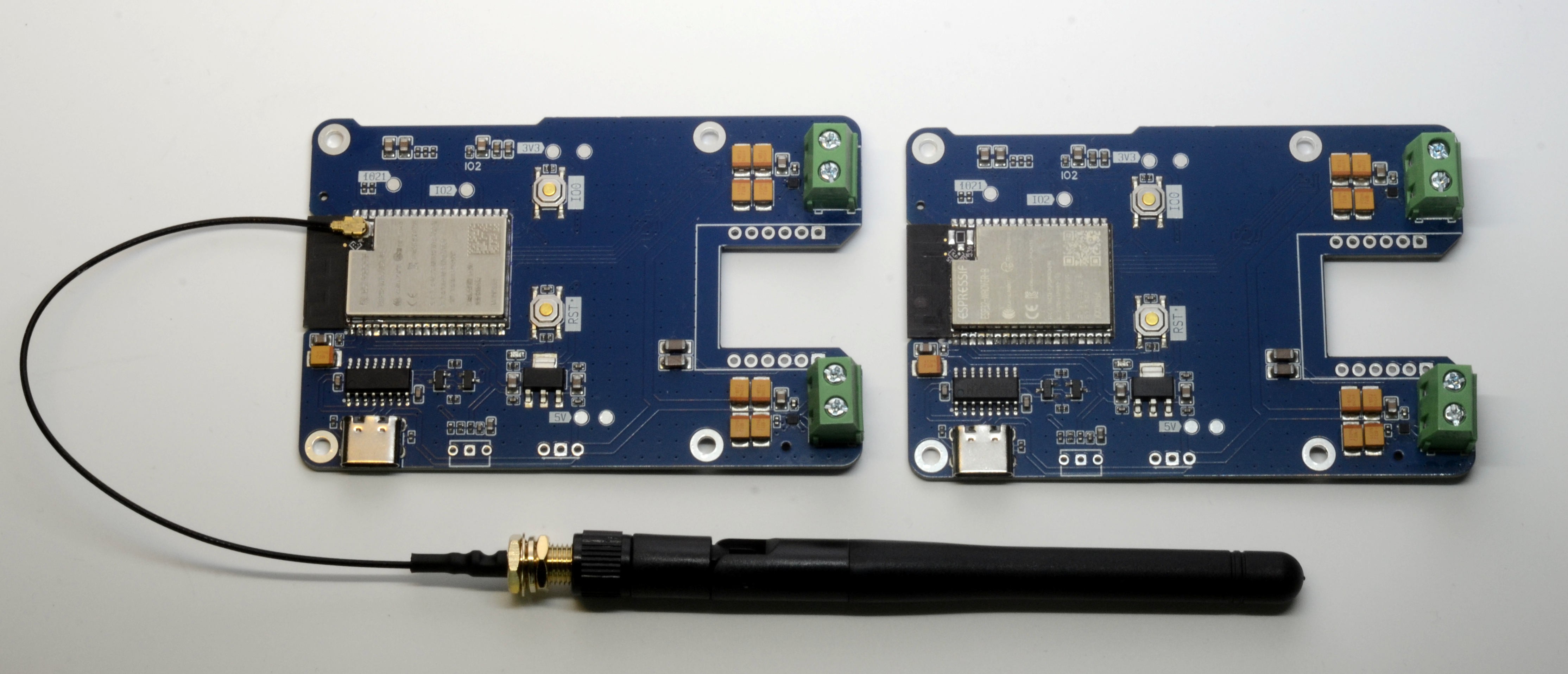
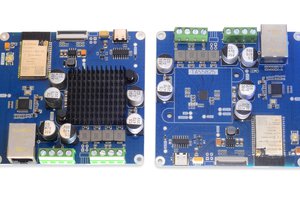
    Hey folks, HiFi-ESP32-Plus is available at Timdie now. At this moment, ESP32-S3 version only, but classic ESP32 is coming from the factory as well.

    Updated PCM5122 driver is underway, so I hope to enable built-in EQ and Crossover in the near future. 2.1 version with subwoofer output is next.

  • New HiFi-ESP32 Plus Board

    andriy.malyshenko11/05/2025 at 11:47 0 comments

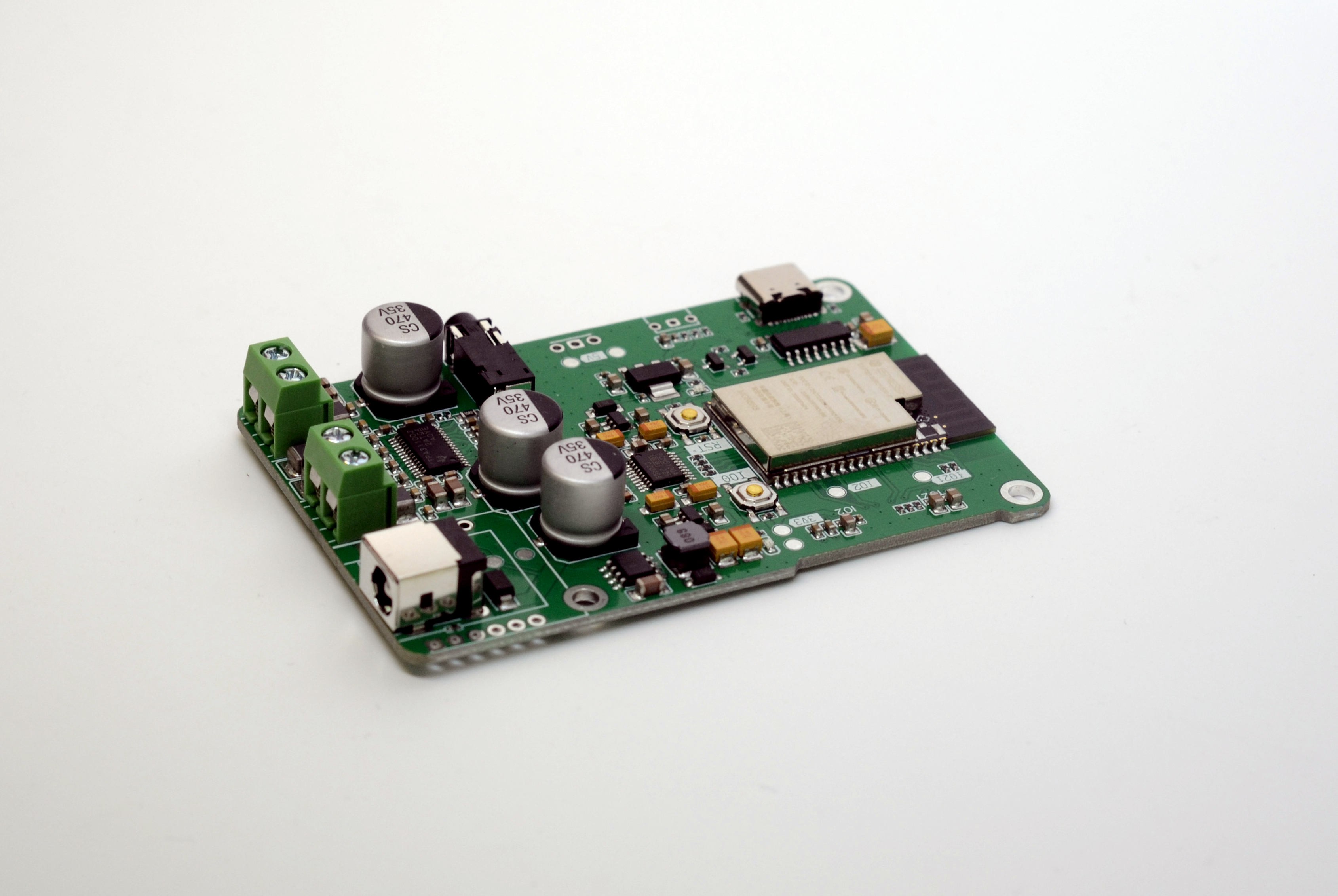
    Hey everyone! Just finished the latest addition to the ESP32 Audio family - the HiFi-ESP32 Plus. This one's been cooking for a while, and I'm pretty excited about what it brings to the table.

    So the original HiFi-ESP32 has been solid with its PCM5100A DAC, but I kept looking for something with more processing power on the audio side, especially when paired with an amp, as in Amped-ESP32. Enter the PCM5122 - same great audio quality but now with a built-in DSP that can actually do some serious work.

    The PCM5122 isn't just a DAC upgrade; it's got a proper digital signal processor inside that can handle:

    - Parametric EQ with multiple bands
    - Digital crossover filters
    - Dynamic range control
    - Bass and treble enhancement for downstream DAC (2.1 systems)

    Basically, all the stuff you'd normally need a separate DSP chip for, or would have to burn CPU cycles on the ESP32 to handle.

    Why This Matters

    If you've ever tried to build a proper speaker system with an ESP32, you know the pain of trying to implement crossovers or room correction in software. The ESP32 is great, but asking it to do real-time audio processing while handling WiFi, Bluetooth, and your application logic gets messy fast.

    With the PCM5122's onboard DSP, you can offload all that heavy lifting. Want to bi-amp some speakers? Set up the crossover in the DAC. Got a room with weird acoustics? Program some EQ curves. The ESP32 just has to tell the DAC what to do and can focus on being a good network audio player.

    Current Status

    Hardware is done and tested. The PCM5122 talks I2C, so initialisation code is needed, luckily already created by the community. The fun part is going to be writing drivers to actually use all the DSP features.

    I'm planning to start with basic EQ control and volume, then work up to the advanced stuff like crossovers. Planning to integrate it all into ESPHome so you can control everything from Home Assistant.

    Also working on an Amped version that pairs the PCM5122 with a TPA3128 amplifier for folks who want the DSP features but with built-in power.

    Next Steps

    Will focus on the hardware first, moving to the bare ESP32 driver implementation with TI PPC help. Hoping to get some help from the community to port it to ESPHome, squeezelite, and snapclient in the future

  • OLED screen

    andriy.malyshenko05/14/2025 at 20:41 0 comments

    Small but colorful update. Starting May 2025, all boards will have an OLED screen solder-less connector. Originally, I added the OLED header on the back side of the PCB that would require careful and skillful soldering (It is quite nice when using squeezelite since you can get quite a lot with existing plugins and settings). Later on, I managed to find the right model of the screen and corresponding connector for a reasonable price, and decided to equip every board with the connector as standard.

    At this moment, one can simply throw in a compatible OLED screen and use a small strap of double-sided adhesive to fix it mechanically. The final result is a nice and finished look

    image

  • Introducing Amped-ESP32

    andriy.malyshenko04/01/2025 at 11:42 0 comments

    Introducing a new board in the ESP32 Audio family - Amped-ESP32. Short version: it is a powerhouse similar to Louder-ESP32 (they sound so similar that I started to suspect they have the same output drivers), but simpler to use and a bit more versatile. 

    Slightly different angle: It is the next step for the HiFi-ESP32 board, which has the same DAC and 3.5mm output. It adds a powerful TAS3110 D-class amp and can drive large speakers no sweat. You can plug headphones into the 3.5mm as well, the amp will get muted in the case.

    Slightly longer story, compared to the TAS5805M of the Louder-ESP32, it lacks DSP capabilities, since it relies on the external DAC to produce an analog signal (PCM5100 in this case). EQ or Loudness processing will have to be done on the MCU instead; that's the price of simplicity. 

    (Spoiler alert) Next stop is the 2.1 version of the Amped board, but I'm still trying to figure out the best way to implement the LF stage (I'm no good at analog, I'm afraid).

  • Introducing Loud-ESP32

    andriy.malyshenko11/13/2024 at 17:10 0 comments

    Today, I'm ready to introduce the Loud-ESP32 board and its ESP32-S3 counterpart. This is the second generation of the Loud-ESP board and a direct successor of the Loud-ESP Duo dock

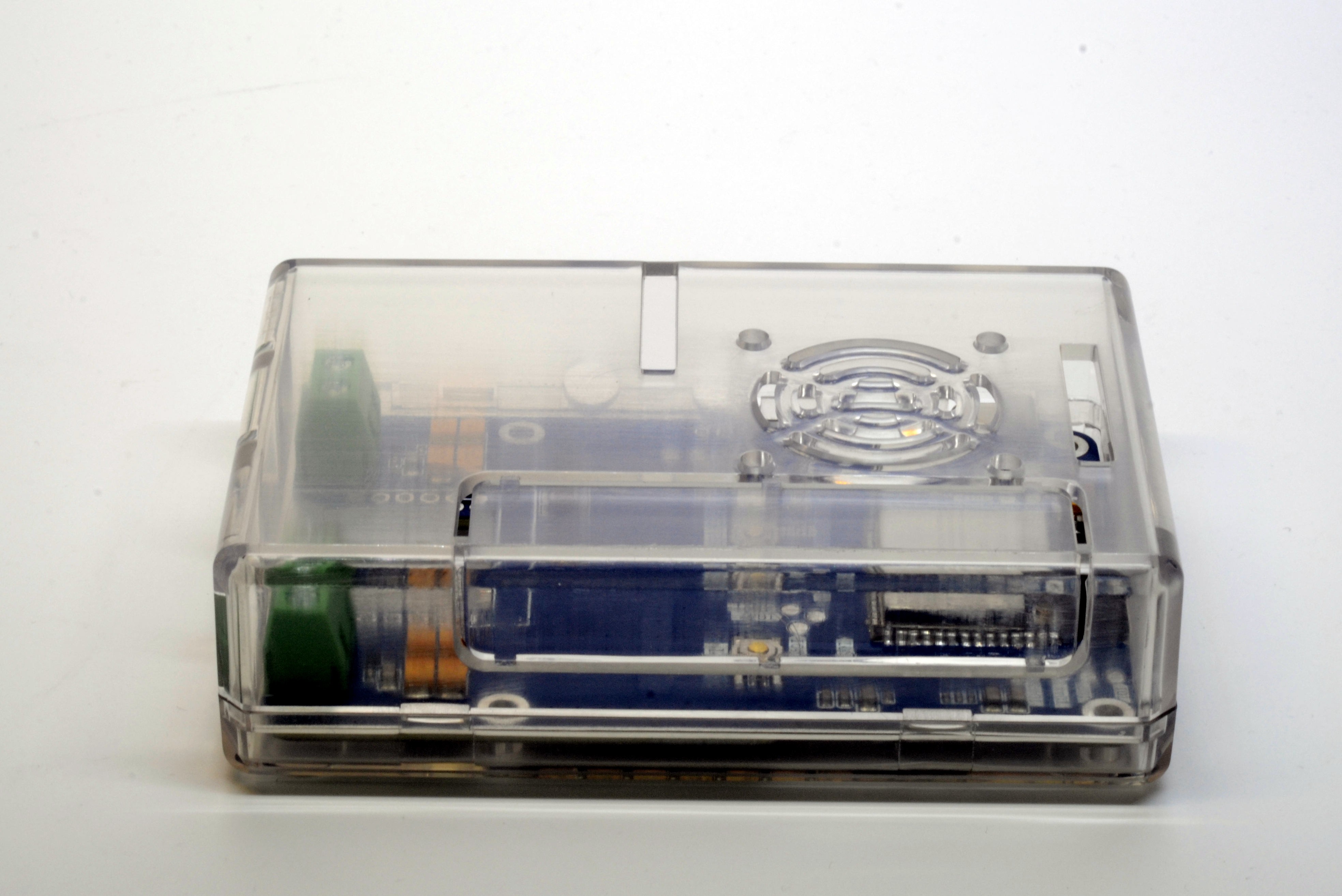
    Like other boards in the ESP Audio series, it is the same size, so you can use it with the Raspberry Pi 4 case. It has a built-in ESP32 module with PSRAM in case (external chips suddenly become inadequately expensive). 

    Also, I switched to the BGA version of the MAX98357 DAC. It is incredibly small, I had doubts if it can handle the job through those tiny pads. But during testing, no issues were found, it plays as good as the larger-sized QFN16 brother. 

    The key point of the board is to deliver good quality audio as simple as possible. It can use any USB-C charger delivering little above 2A of current (pretty much any modern phone charger), and it is surprisingly loud for the size.

    To chase the low price point I decided to make most of the peripherals optional (like Ethernet or IR reader), so one can add only the things you'd really need.